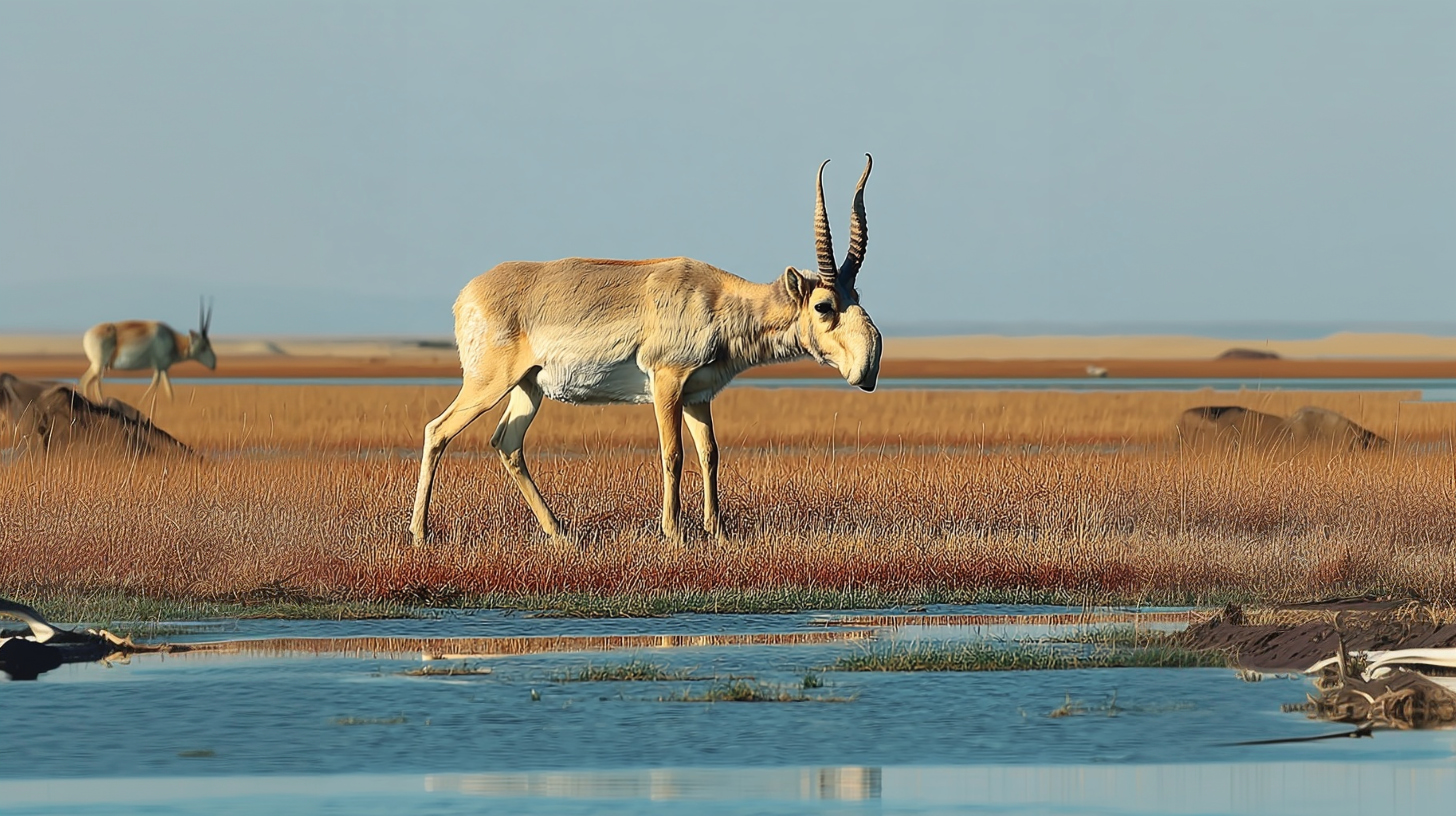
The Saiga Antelope is one of the most unusual and evolutionarily fascinating mammals on Earth. Instantly recognizable by its large, bulbous, trunk-like nose, the saiga antelope looks like a creature from another era—and in many ways, it is. This remarkable species survived the Ice Age, outlasting mammoths, woolly rhinoceroses, and saber-toothed predators. Today, the saiga antelope remains a living relic of prehistoric Eurasia.
Once roaming the Eurasian steppe and Gobi region in vast herds numbering in the millions, the saiga antelope played a crucial ecological role across Central Asia. Although its numbers have collapsed dramatically in recent decades, the saiga antelope still persists in remote steppe and semi-desert landscapes, making it one of the most iconic and endangered animals of the Gobi and Central Asian steppe.
What Is the Saiga Antelope?
The Saiga Antelope (Saiga tatarica) is a medium-sized antelope species adapted to open grasslands, semi-deserts, and cold steppe environments. Unlike African antelopes, the saiga evolved to survive harsh winters, extreme winds, dust storms, and long seasonal migrations.
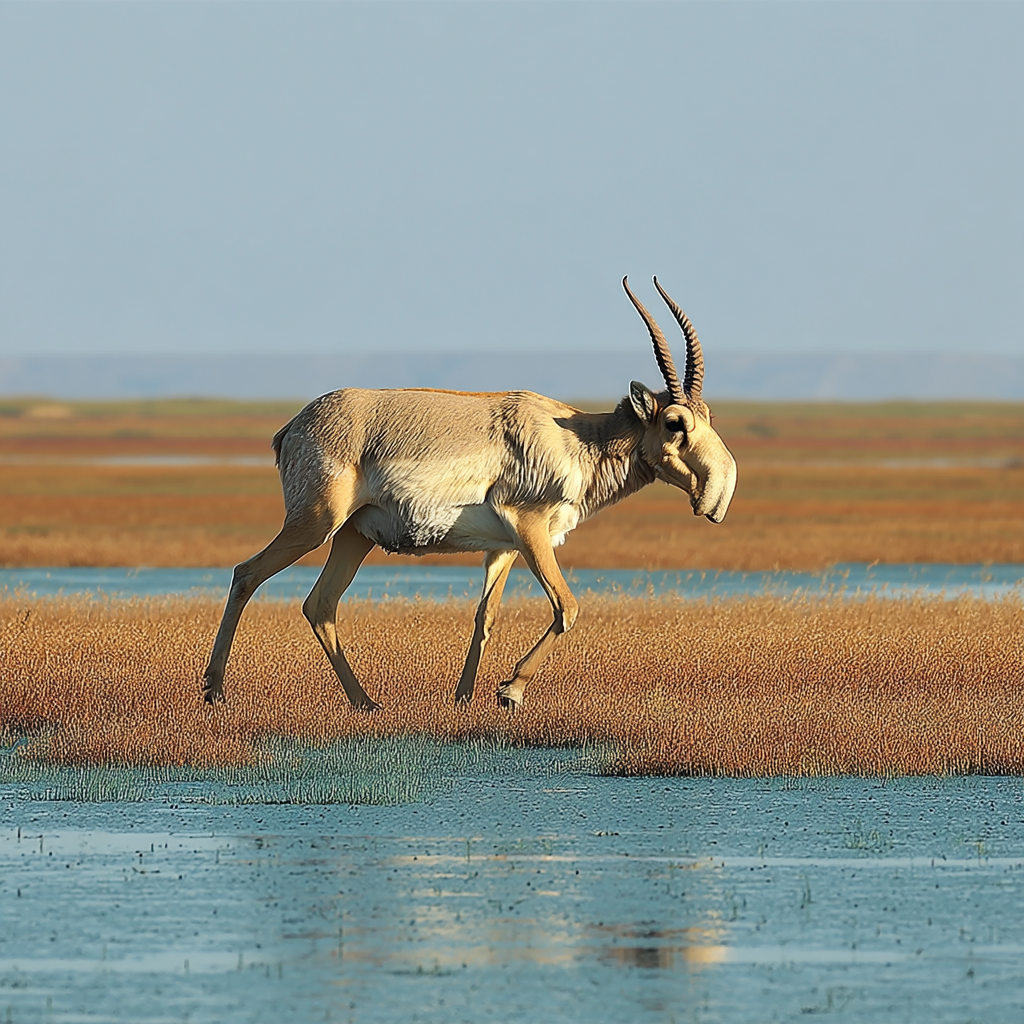
Key characteristics of the saiga antelope include:
- A large, flexible nose with internal chambers
- Pale sandy or grayish coat that changes seasonally
- Slender legs built for endurance running
- Males with pale, ridged horns (females lack horns)
- Highly social behavior and massive herd formation
The saiga antelope is not only unique in appearance but also in ecological function, serving as one of the most important grazing animals of the Eurasian steppe.
Saiga Antelope: A Survivor of the Ice Age
The saiga antelope evolved during the Pleistocene epoch, when much of Eurasia was covered by cold, dry grasslands. During this period, saiga antelopes coexisted with megafauna such as mammoths and steppe bison.
Unlike many Ice Age species, the saiga antelope survived massive climatic shifts, adapting repeatedly to changing conditions. Its success came from:
- Extreme physiological flexibility
- Ability to migrate long distances
- Specialized respiratory adaptations
- Rapid reproduction during favorable years
These traits allowed the saiga antelope to endure glacial cycles that wiped out countless other large mammals.
Unique Adaptations of the Saiga Antelope
The Iconic Saiga Nose
The most distinctive feature of the Saiga Antelope is its oversized, downward-facing nose. This extraordinary structure is not decorative—it is essential for survival.
The saiga’s nose:
- Filters dust during dry, windy seasons
- Warms freezing air before it reaches the lungs in winter
- Cools hot air during summer heat
- Regulates breathing during long-distance migration
Inside the nose are complex nasal passages that trap particles and regulate temperature, making the saiga antelope uniquely adapted to the dusty Gobi and steppe environment.
Seasonal Coat Changes
The saiga antelope grows a thick, pale winter coat that provides insulation against freezing temperatures and biting winds. In summer, this coat molts into a shorter, lighter coat suited for heat dissipation.
This seasonal transformation allows the saiga antelope to thrive in regions where temperatures can swing from –40°C in winter to +40°C in summer.
Speed and Endurance
Saiga antelopes are built for endurance rather than sprinting. Their long legs and lightweight bodies allow them to:
- Travel hundreds of kilometers during migration
- Escape predators through sustained running
- Move efficiently across flat, open terrain
This endurance is critical in the vast open landscapes of the Gobi and Eurasian steppe, where cover is minimal.
Saiga Antelope Habitat
Where Do Saiga Antelopes Live?
Historically, saiga antelopes ranged across:
- Mongolia
- Kazakhstan
- Russia
- Uzbekistan
- Turkmenistan
- Western China
Today, their range is severely fragmented, but saiga antelopes still inhabit:
- Open steppe grasslands
- Semi-desert plains
- Flat, treeless terrain with good visibility
In the Gobi region, saiga antelopes are found in marginal steppe-desert transition zones where grazing and migration remain possible.
Why Flat Terrain Matters
Saiga antelopes rely on visibility and space rather than cover. Flat terrain allows them to:
- Detect predators at long distances
- Coordinate herd movement
- Maintain high migration speed
Mountainous or heavily forested areas are unsuitable, which makes habitat fragmentation particularly devastating.
Migration: One of the Greatest Journeys in the Animal Kingdom
The Saiga Antelope is among the most migratory land mammals on Earth.
Seasonal Migration Patterns
Saiga antelopes migrate:
- Northward in spring to reach calving grounds
- Southward in autumn to escape extreme winter conditions
- Along routes that may span hundreds or even thousands of kilometers
These migrations are driven by:
- Snow depth
- Vegetation growth
- Water availability
- Predator pressure
Migration allows saiga antelopes to exploit short-lived grazing opportunities across enormous landscapes.
Herd Behavior During Migration
During migration, saiga antelopes form huge herds, sometimes numbering in the tens of thousands. This behavior:
- Reduces predation risk
- Improves navigation across open land
- Enhances reproductive success
Historically, such herds shaped the entire ecology of the Eurasian steppe.
Diet and Ecological Role
What Do Saiga Antelopes Eat?
The saiga antelope is a selective grazer and browser that feeds on:
- Steppe grasses
- Herbs
- Wormwood
- Salt-tolerant plants
- Low-nutrient vegetation avoided by livestock
This diet allows saiga antelopes to survive in nutrient-poor environments, reducing direct competition with domestic animals.
Ecological Importance
The saiga antelope is a keystone species.
Its ecological roles include:
- Regulating grassland vegetation
- Dispersing seeds through dung
- Supporting predator populations
- Maintaining open steppe structure
The disappearance of saiga antelopes has cascading effects across entire ecosystems.
Predators of the Saiga Antelope
Natural predators include:
- Wolves
- Foxes (primarily targeting calves)
- Large birds of prey
Historically, predation pressure was balanced by large herd sizes and migration. Today, human activity poses a far greater threat than natural predators.
Population Collapse of the Saiga Antelope
Once Millions, Now Critically Endangered
At the beginning of the 20th century, saiga antelopes numbered in the millions. Today, populations have collapsed by more than 95%.
The saiga antelope is now listed as Critically Endangered.
Major Causes of Decline
Poaching
- Saiga horns are used in traditional medicine
- Only males have horns, skewing sex ratios
- Organized poaching devastated populations in the 1990s
Disease Outbreaks
- Mass die-offs caused by bacterial infections
- Entire herds lost within days
- Climate stress increases disease vulnerability
Habitat Fragmentation
- Roads, railways, and fences block migration routes
- Infrastructure prevents access to seasonal grazing
- Development isolates populations
Climate Change
- Increased frequency of extreme weather
- Unpredictable winters and droughts
- Disruption of vegetation cycles
Saiga Antelope Conservation Efforts
Protection and Recovery Programs
Conservation efforts focus on:
- Anti-poaching patrols
- Removal or modification of migration barriers
- Disease monitoring
- Habitat protection
- International cooperation
Some populations have shown remarkable recovery when protected effectively.
Community-Based Conservation
Successful saiga conservation involves:
- Engaging local communities
- Providing alternative livelihoods
- Education about ecological importance
- Cross-border cooperation
Because saiga antelopes migrate across national boundaries, conservation must be international.
Saiga Antelope and the Gobi Region
In the Gobi and adjacent steppe zones, saiga antelopes represent a fragile link to the region’s Ice Age past. Their survival here depends on:
- Preserving open steppe corridors
- Minimizing infrastructure barriers
- Protecting marginal desert-steppe habitats
Saving the saiga antelope helps protect the greater Gobi ecosystem, including other rare species adapted to extreme environments.
Cultural and Historical Significance
For centuries, saiga antelopes featured in:
- Steppe folklore
- Indigenous hunting traditions
- Historical accounts of vast migrations
They symbolize freedom, movement, and resilience in Central Asian culture.
Can You See Saiga Antelopes Today?
Seeing saiga antelopes in the wild is increasingly rare due to their limited range and protection status.
Most sightings today occur:
- In protected reserves
- During scientific monitoring
- Via aerial surveys and camera traps
Responsible conservation prioritizes minimal disturbance over tourism.
Why the Saiga Antelope Matters
The Saiga Antelope is more than a strange-looking animal. It is:
- A survivor of the Ice Age
- A keystone species of the steppe
- An indicator of ecosystem health
- A symbol of conservation urgency
If saiga antelopes disappear, it would represent the loss of one of the last functioning remnants of Eurasia’s ancient grassland ecosystems.
Conclusion: Saving a Prehistoric Survivor
The Saiga Antelope stands at the crossroads of deep evolutionary history and modern conservation challenges. Its bizarre appearance hides an extraordinary story of survival, migration, and adaptation across some of the harshest landscapes on Earth.
Protecting the saiga antelope in the Gobi and Eurasian steppe is not only about saving a single species—it is about preserving an ancient ecological system shaped by movement, openness, and resilience. The fate of this Ice Age survivor now rests in human hands.
Leave a Reply