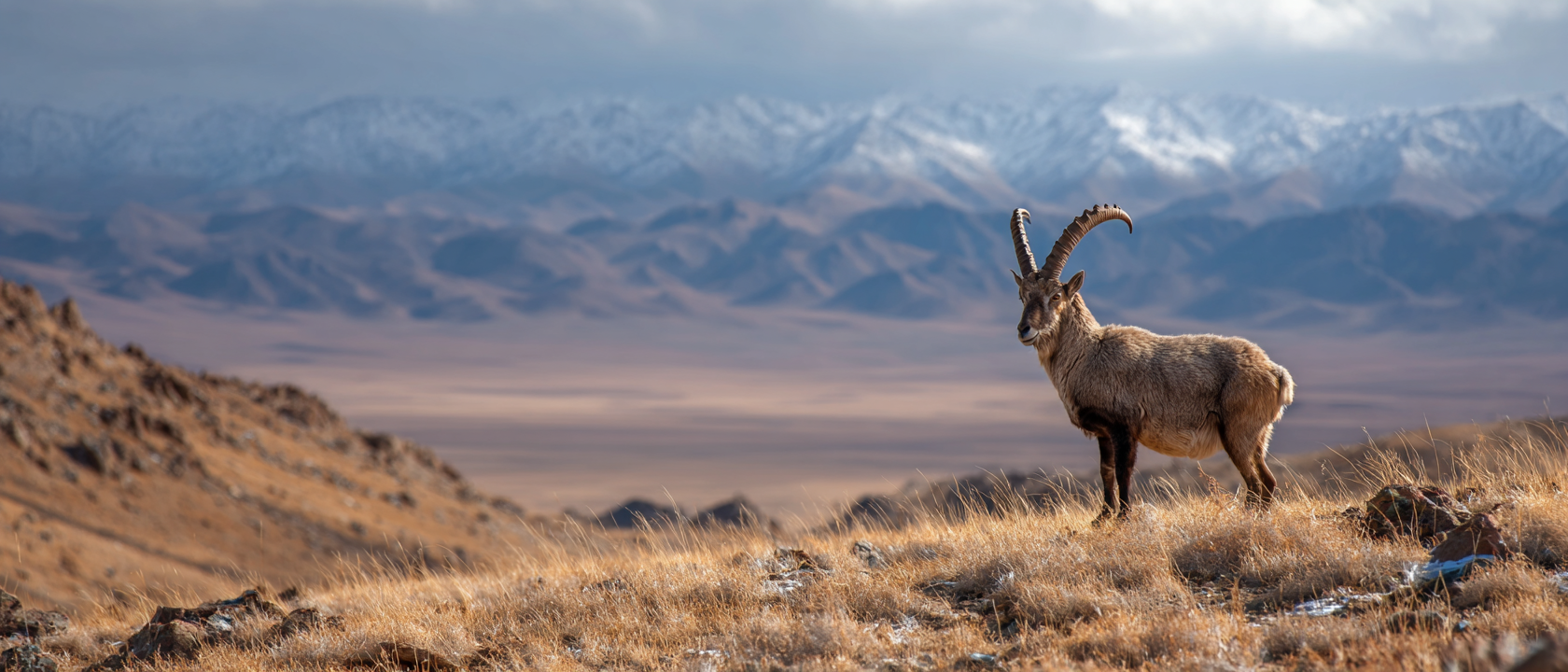
Category: wildlife

  • The Siberian Ibex of the Gobi Desert: Mongolia’s Master Mountain Climber

    The Siberian Ibex of the Gobi Desert: Mongolia’s Master Mountain Climber

    The Siberian ibex stands as one of the most impressive wild goat species inhabiting the rugged mountains of the Gobi Desert. This remarkable ungulate has conquered some of the harshest terrain in Mongolia, making the Siberian ibex Gobi population a testament to evolutionary adaptation and survival. With their massive curved horns and extraordinary climbing abilities, Siberian ibex represent the quintessential symbol of wilderness in the Gobi Desert ecosystem.

    What is a Siberian Ibex?

    The Siberian ibex (Capra sibirica), also known as the Asian ibex or Gobi ibex, belongs to the wild goat family and ranks among the largest ibex species worldwide. These magnificent animals display sexual dimorphism, with male Siberian ibex significantly larger than females. Adult male ibex in the Gobi Desert can weigh between 80 and 130 kilograms, while females typically weigh 35 to 50 kilograms. The size difference between male and female Siberian ibex becomes particularly evident during the autumn rutting season when large males compete for breeding rights.
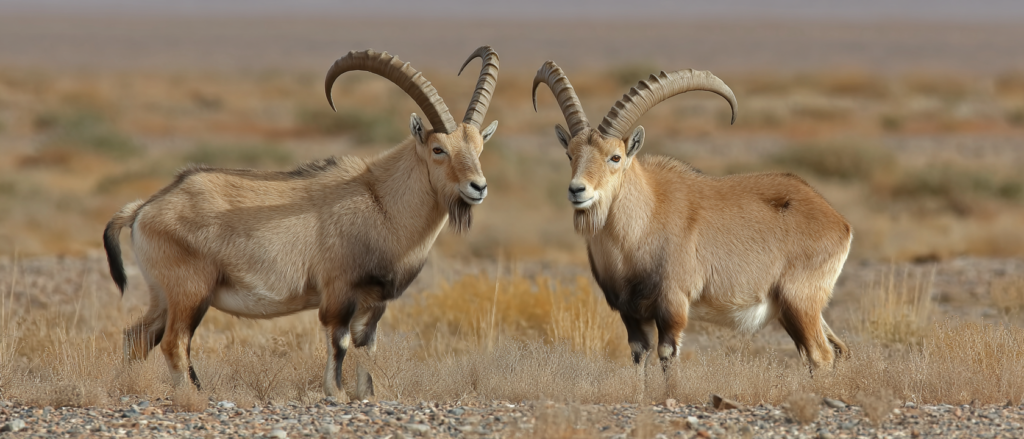
    siberian ibex of the gobi desert

    The most striking feature of the Siberian ibex is undoubtedly the impressive horns carried by males. These curved, ridged horns can reach lengths exceeding 130 centimeters, sweeping backward in a graceful arc that makes the Siberian ibex instantly recognizable. Female ibex possess much smaller horns, typically measuring 20 to 35 centimeters in length. The horns of male Siberian ibex grow throughout their lifetime, with annual growth rings allowing researchers to estimate the age of individual animals.

    Siberian ibex display thick, shaggy coats that vary seasonally to protect against the Gobi Desert’s temperature extremes. During winter months, the Siberian ibex coat becomes notably thicker and lighter in color, ranging from grayish-brown to almost white. Summer pelage appears shorter and darker, typically exhibiting rich brown tones with distinctive white patches on the legs, rump, and belly. This seasonal adaptation allows Gobi ibex populations to maintain body temperature efficiently across dramatic seasonal variations.

    The body structure of the Siberian ibex reflects millions of years of adaptation to mountainous terrain. Powerful legs with specialized hooves enable ibex to navigate near-vertical cliff faces with astonishing agility. The hooves feature hard outer edges and softer, rubbery centers that provide exceptional grip on rocky surfaces. This anatomical specialization makes the Siberian ibex perhaps the most accomplished climber among all large mammals in the Gobi Desert region.

    Siberian Ibex Habitat in the Gobi Desert

    The Gobi Desert provides critical habitat for Siberian ibex populations across Mongolia and neighboring regions of China and Russia. Unlike desert-dwelling animals that prefer flat terrain, Siberian ibex exclusively inhabit mountainous areas within the Gobi, favoring steep, rocky slopes and cliff faces. The ibex habitat in the Gobi typically features elevations ranging from 1,500 to 5,000 meters above sea level, with the animals showing preference for areas where rugged topography provides protection from predators.

    The Altai Mountains region of western Mongolia supports substantial Siberian ibex populations, with these mountains providing ideal habitat conditions. The Gobi Gurvan Saikhan National Park in southern Mongolia also hosts important ibex populations, particularly in the mountainous areas surrounding the famous Yolyn Am gorge. These protected areas ensure that Siberian ibex have access to undisturbed habitat essential for their survival in the challenging Gobi environment.
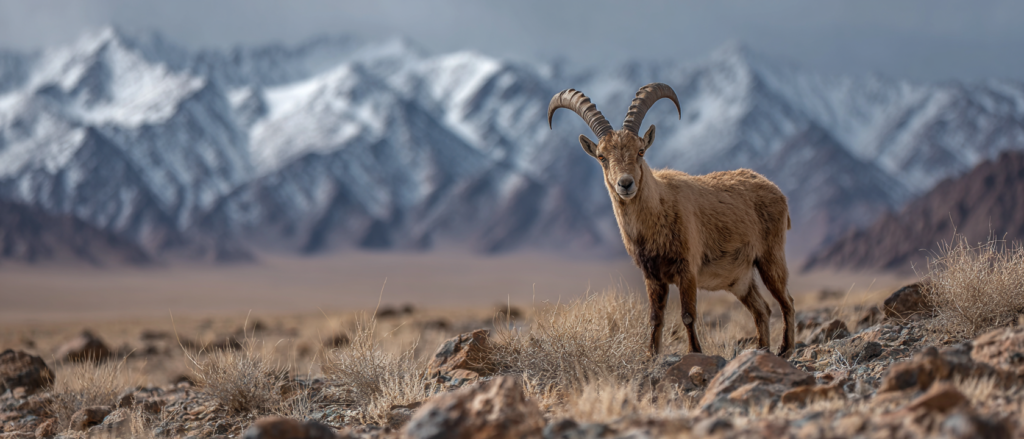
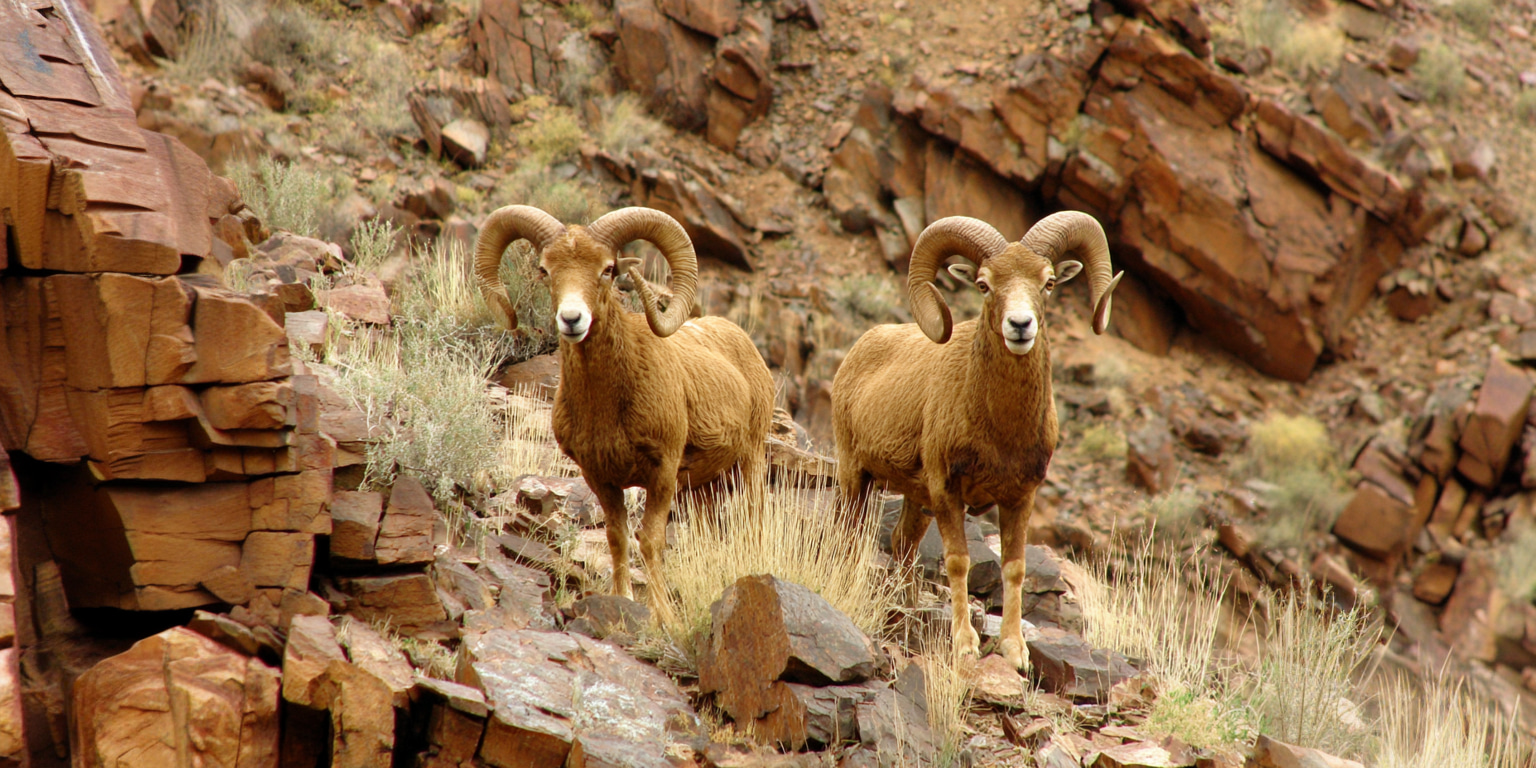
    siberian ibex of the gobi desert in mountains

    Siberian ibex demonstrate remarkable habitat flexibility within their preferred mountain terrain. During summer months, Gobi ibex typically occupy higher elevations where vegetation remains relatively abundant and temperatures stay moderate. Alpine meadows and rocky slopes above 3,000 meters provide optimal summer habitat for Siberian ibex herds. As winter approaches and snow accumulates at higher elevations, ibex populations migrate to lower slopes where food remains accessible and terrain offers protection from harsh winds.

    The habitat requirements of Siberian ibex include proximity to water sources, though these animals can survive extended periods with minimal drinking water by obtaining moisture from vegetation. Rocky outcrops and cliff faces serve multiple functions in ibex habitat, providing escape terrain from predators, shelter from extreme weather, and platforms for dominant males to display during the breeding season. The Gobi’s numerous mountain ranges create a network of suitable Siberian ibex habitat, allowing populations to persist across the region despite the overall aridity of the desert environment.

    Vegetation patterns strongly influence Siberian ibex distribution within the Gobi Desert. Areas supporting diverse plant communities attract larger ibex herds, while barren slopes see only occasional use. The ibex habitat selection reflects not only current food availability but also the animals’ remarkable memory of seasonal vegetation patterns developed through years of experience navigating their home ranges.

    Siberian Ibex Diet and Feeding Behavior

    The Siberian ibex demonstrates impressive dietary flexibility, consuming a wide variety of plant species available in the Gobi Desert’s mountain habitats. As herbivores, Gobi ibex feed primarily on grasses, sedges, herbs, and shrubs, with their diet varying seasonally based on plant availability. During the brief but productive summer months, Siberian ibex consume fresh green vegetation, taking advantage of abundant alpine meadows and flowering plants that appear following spring snowmelt.

    The feeding strategy of Siberian ibex involves extensive daily movement across mountain slopes to locate the most nutritious forage. A single ibex may travel several kilometers daily while feeding, utilizing different elevations and aspects to find optimal vegetation. Early morning and late afternoon represent peak feeding periods for Gobi ibex, with the animals resting during midday heat on shaded cliff ledges or in rocky shelters.

    Winter presents severe challenges for Siberian ibex populations in the Gobi Desert, as snow cover and frozen ground limit food availability. During these harsh months, ibex diet shifts to include more woody browse, including twigs, bark, and dried grasses exposed on wind-swept slopes. The Siberian ibex demonstrates remarkable ability to dig through snow to reach buried vegetation, using their powerful front legs and hooves to excavate feeding craters. This behavior allows Gobi ibex herds to survive winter conditions that would be fatal to less adapted species.

    The digestive system of the Siberian ibex features a specialized rumen that enables efficient processing of fibrous plant material. Like other wild goats, ibex are ruminants that chew cud, breaking down tough vegetation through fermentation. This digestive adaptation allows Siberian ibex to extract maximum nutrition from the relatively poor-quality forage available in many Gobi Desert habitats. Water requirements remain modest, with ibex obtaining much of their moisture needs from vegetation, though access to water sources becomes more critical during hot summer months.

    Feeding competition within Siberian ibex herds follows a clear dominance hierarchy, particularly during winter when food becomes scarce. Larger, more dominant males secure access to the best feeding sites, while younger animals and females must often settle for less productive areas. This social structure influences the overall health and survival rates of different age and sex classes within Gobi ibex populations.

    Social Structure and Behavior of Siberian Ibex

    Siberian ibex exhibit complex social organization that varies seasonally and by sex. For most of the year, adult male ibex form bachelor groups separate from female herds. These male groups typically consist of two to twenty individuals, often segregating by age with mature males forming distinct groups from younger bachelors. The bachelor groups of Siberian ibex in the Gobi occupy the most rugged terrain, where their superior climbing abilities provide advantages over potential predators.

    Female Siberian ibex and their offspring form maternal herds that can number from five to thirty individuals, though larger aggregations sometimes form in areas with abundant food resources. These nursery groups provide protection for young ibex through collective vigilance, with multiple adults watching for predators while others feed. The matriarchal structure of female Siberian ibex herds centers on experienced older females who lead movements between feeding areas and know the location of critical resources throughout their home range.

    The behavior of Siberian ibex reflects constant awareness of predation risk, with the animals spending significant time scanning their surroundings and positioning themselves near escape terrain. When threatened, Gobi ibex flee upward to steeper slopes and cliff faces where their climbing abilities provide decisive advantages over pursuing predators. The alarm system of Siberian ibex herds relies on sharp whistles and snorts that alert other group members to danger, triggering coordinated flight responses.

    Daily activity patterns of Siberian ibex include extended resting periods during midday when the animals retreat to secure locations for rumination. These rest sites in the Gobi typically feature good visibility and proximity to escape routes, allowing ibex to detect approaching threats while digesting their food. The selection of rest sites demonstrates the sophisticated spatial awareness and risk assessment capabilities of Siberian ibex.

    Siberian ibex communication involves various vocalizations, body postures, and scent marking behaviors. Males maintain dominance relationships through visual displays rather than frequent physical combat, though fierce battles occur during the breeding season. The social intelligence of Gobi ibex enables complex interactions within groups and sophisticated responses to environmental challenges.

    Siberian Ibex Breeding Season and Reproduction

    The breeding season for Siberian ibex in the Gobi Desert occurs during late autumn, typically from October through December. This timing ensures that kids are born in late spring when weather conditions improve and vegetation begins growing, providing optimal conditions for newborn survival. The rut transforms the behavior of male Siberian ibex dramatically, as bachelor groups dissolve and mature males seek out female herds to compete for breeding opportunities.

    Dominant male Siberian ibex establish breeding territories that overlap with female herd ranges, defending these areas against rival males. The competition between males during the rut involves impressive displays of strength and agility, with rivals clashing horns in spectacular battles. These confrontations between male ibex can last hours, with combatants rearing up on hind legs before crashing together with tremendous force. The massive horns of Siberian ibex absorb these impacts, and serious injuries remain relatively rare despite the violence of these encounters.

    Female Siberian ibex reach sexual maturity at approximately two years of age, while males typically don’t successfully breed until four to five years old when they’ve grown large enough to compete with established dominant males. The gestation period for Siberian ibex lasts approximately 170 to 180 days, with females giving birth to one or occasionally two kids in late May or early June. The timing of births in Gobi ibex populations closely tracks the brief period of maximum vegetation productivity in these harsh mountain environments.

    Newborn Siberian ibex kids demonstrate remarkable precociousness, standing and nursing within hours of birth. Within days, young ibex accompany their mothers across steep terrain, displaying the climbing abilities that characterize the species. Female Siberian ibex are attentive mothers, nursing their kids for four to six months while teaching them essential survival skills. The maternal investment in Gobi ibex includes guiding young to feeding areas, demonstrating predator avoidance behaviors, and integrating kids into the social structure of the herd.

    Kid mortality in Siberian ibex populations can be substantial, particularly during the first few weeks of life when young animals remain most vulnerable to predation. Snow leopards, wolves, and golden eagles all prey on young ibex in the Gobi Desert. Weather conditions during the birth season significantly impact kid survival rates, with late spring snowstorms causing mortality spikes in some years. Despite these challenges, Siberian ibex populations in the Gobi generally maintain stable reproduction rates under normal conditions.

    Predators and Survival Challenges

    The Siberian ibex faces several natural predators within the Gobi Desert ecosystem, with snow leopards representing the most significant threat to adult ibex. These elusive big cats specialize in hunting wild ungulates in mountain terrain, and Siberian ibex constitute a primary prey species in many areas. The relationship between snow leopards and Gobi ibex shapes the behavior and habitat use of both species, with ibex constantly balancing feeding needs against predation risk.

    Wolves also prey on Siberian ibex in the Gobi, particularly targeting young, old, or injured individuals. Pack-hunting wolves can successfully bring down healthy adult ibex, though the steep terrain preferred by these wild goats often provides effective refuge. Lynx occasionally hunt smaller Siberian ibex, while golden eagles pose threats primarily to young kids. This diverse predator community exerts continuous selection pressure on Gobi ibex populations, favoring animals with superior vigilance and climbing abilities.

    Beyond predation, Siberian ibex in the Gobi Desert face numerous survival challenges related to the extreme environment. Winter conditions test the limits of ibex endurance, with temperatures plunging far below freezing and food becoming scarce. Deep snow can restrict movement and access to forage, leading to starvation in severe winters. The Siberian ibex has evolved remarkable cold tolerance, but prolonged harsh conditions still cause mortality, particularly among young and elderly animals.

    Competition with domestic livestock represents an increasing challenge for Siberian ibex populations across the Gobi region. Sheep and goats herded by nomadic pastoralists utilize many of the same mountain habitats as wild ibex, reducing available forage and potentially transmitting diseases. The overlap between domestic and wild ungulates creates complex management challenges for conservation programs working to protect Gobi ibex populations.

    Disease outbreaks can devastate Siberian ibex populations, with various parasites and pathogens affecting these animals. Pneumonia and other respiratory infections pose particular risks to ibex herds, especially when animals are weakened by harsh winter conditions. The social nature of Siberian ibex facilitates disease transmission within herds, making populations vulnerable to epidemics.

    Conservation Status of Siberian Ibex

    The Siberian ibex currently holds a conservation status of Least Concern according to international assessments, reflecting relatively stable populations across much of the species’ range. However, Gobi Desert populations face specific conservation challenges that require ongoing monitoring and management efforts. Habitat loss, hunting pressure, and competition with livestock all threaten the long-term viability of Siberian ibex in Mongolia.

    Protected areas within the Gobi Desert provide crucial refuges for ibex populations. National parks and nature reserves restrict hunting and limit human disturbance in critical habitat, allowing Siberian ibex herds to thrive. The establishment of these protected areas represents one of the most effective conservation strategies for Gobi ibex, ensuring that substantial portions of suitable mountain habitat remain available for wildlife.

    Hunting regulations govern the take of Siberian ibex in Mongolia, with licensed trophy hunting permitted in some areas outside protected zones. Properly managed hunting programs can provide economic incentives for conservation while allowing sustainable use of ibex populations. However, illegal poaching remains a concern in some regions, with enforcement challenges in remote mountain areas. The impressive horns of male Siberian ibex make them targets for illegal hunters seeking valuable trophies.

    Community-based conservation initiatives engage local herders in protecting Siberian ibex populations. These programs recognize that people living alongside wildlife play crucial roles in conservation success. By providing benefits from wildlife presence and involving communities in management decisions, conservation organizations work to build local support for Gobi ibex protection. Some initiatives compensate herders for reducing livestock numbers in critical ibex habitat or for protecting areas during sensitive breeding seasons.

    Research programs monitor Siberian ibex populations throughout the Gobi using various techniques including aerial surveys, camera traps, and GPS collar studies. This research provides essential data on population trends, movement patterns, and habitat use that inform conservation planning. Long-term monitoring reveals how Gobi ibex populations respond to environmental changes and management interventions.

    Climate change poses emerging threats to Siberian ibex in the Gobi Desert as shifting precipitation patterns and increasing temperatures alter vegetation communities and water availability. The future of Gobi ibex populations may depend on their ability to adapt to these environmental changes and on human efforts to maintain habitat connectivity and reduce other stressors.

    Observing Siberian Ibex in the Gobi Desert

    Wildlife enthusiasts visiting the Gobi Desert have excellent opportunities to observe Siberian ibex in their natural mountain habitat. The best viewing periods occur during early morning and late afternoon when ibex actively feed on mountain slopes. Patient observers scanning steep hillsides and cliff faces often spot the distinctive silhouettes of these magnificent wild goats against the sky.

    Several locations within the Gobi region offer particularly good chances for Siberian ibex sightings. The Gobi Gurvan Saikhan National Park provides accessible ibex habitat with relatively habituated animals that tolerate observation from respectful distances. The Altai Mountains in western Mongolia support larger ibex populations but require more extensive travel to reach prime viewing areas. Tour operators specializing in Gobi wildlife expeditions can guide visitors to locations where Siberian ibex encounters are most likely.

    Tips for spotting Siberian ibex in the Gobi:

    • Use quality binoculars or spotting scopes to scan distant slopes and ridgelines
    • Focus searches on steep, rocky terrain above 2,000 meters elevation
    • Look for movement and the distinctive horn profiles of male ibex
    • Visit during autumn to witness breeding behavior and dramatic male competitions
    • Hire experienced local guides familiar with ibex habitat and movement patterns

    Photographers seeking images of Siberian ibex should bring telephoto lenses of at least 400mm focal length, as these wary animals typically maintain considerable distance from humans. The dramatic landscape of the Gobi Desert provides spectacular backdrops for ibex photography, with golden hour light especially favorable for capturing the animals’ impressive forms against rugged terrain.

    Observing Siberian ibex requires patience and physical fitness, as viewing locations often involve hiking across steep, uneven ground at high elevations. Visitors should prepare for altitude effects and carry adequate water, as ibex habitat can be far from services. The rewards of successfully observing these magnificent animals in the wild justify the effort, offering unforgettable wildlife encounters in one of Asia’s most spectacular wilderness regions.

    Cultural Significance of Siberian Ibex

    The Siberian ibex holds important cultural significance for peoples of the Gobi Desert region, featuring prominently in traditional hunting practices, folklore, and artistic expressions. Ancient petroglyphs throughout Mongolia depict ibex, demonstrating the species’ long association with human cultures in these mountains. The hunting prowess required to take an ibex in steep terrain earned special respect in nomadic societies, with successful hunters gaining prestige within their communities.

    Traditional Mongolian medicine utilized various parts of Siberian ibex for treating ailments, and these practices continue in some areas today. The impressive horns of male ibex serve as prized possessions, displayed in homes and used in ceremonial contexts. Modern Mongolian culture continues to value the ibex as a symbol of mountain wilderness and natural heritage.

    The Future of Siberian Ibex in the Gobi

    Ensuring the future of Siberian ibex populations in the Gobi Desert requires balancing conservation needs with the livelihoods of local communities who share the landscape with wildlife. Effective management strategies must address habitat protection, sustainable use, and human-wildlife coexistence. The success of conservation efforts depends on maintaining healthy mountain ecosystems that support not only ibex but also the full complement of native species.

    International cooperation enhances Siberian ibex conservation as the species ranges across multiple countries in Central Asia. Coordinated management approaches and shared research benefit transboundary populations, ensuring that conservation efforts remain effective across the ibex’s full range. Mongolia’s commitment to protecting its natural heritage positions the country as a leader in Siberian ibex conservation.

    The Siberian ibex of the Gobi Desert exemplifies nature’s ability to thrive in extreme environments through remarkable adaptations and resilience. These magnificent wild goats climbing the steepest cliffs remind us of the wild beauty that persists in some of Earth’s harshest landscapes. Protecting Siberian ibex populations preserves not only a spectacular species but also the ecological integrity and cultural heritage of the Gobi Desert region. Every ibex navigating the precipitous slopes of Gobi mountains represents a link to ancient wilderness and a responsibility to ensure these animals continue to thrive for generations to come.
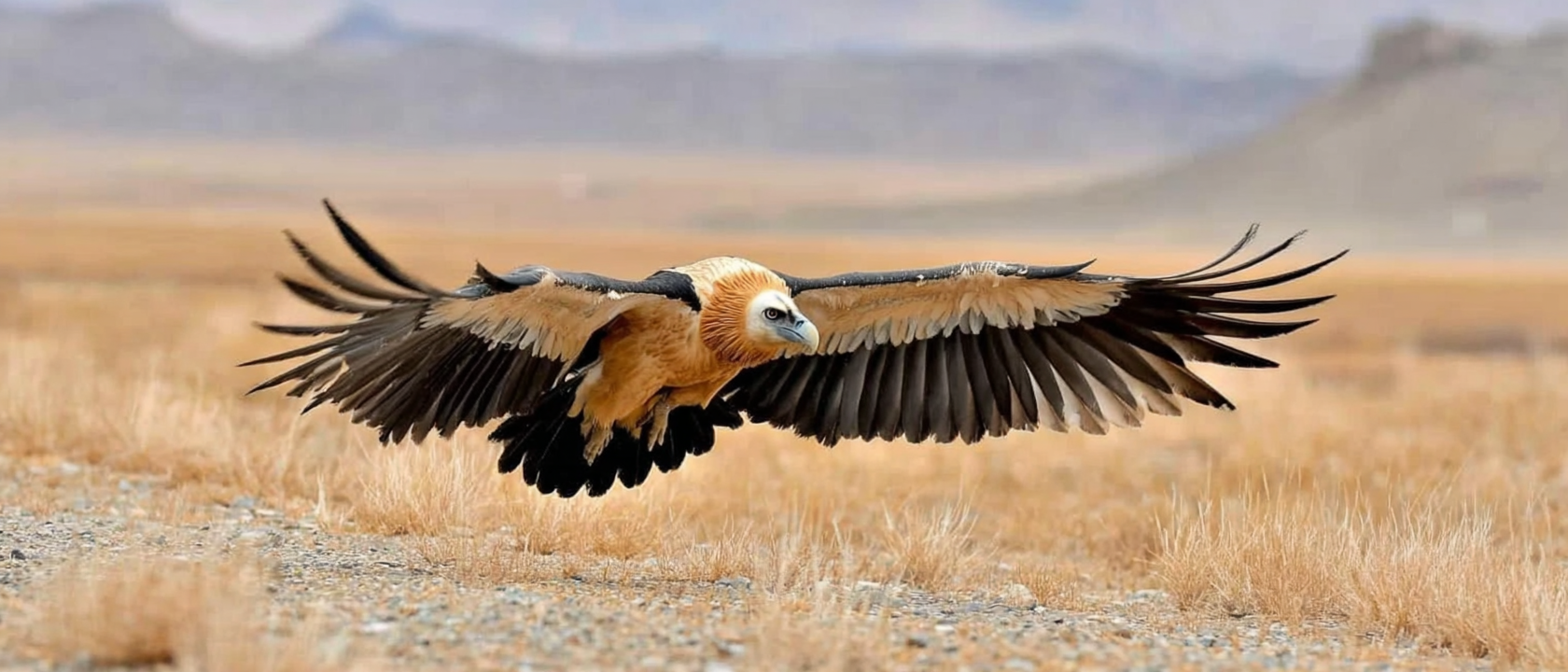
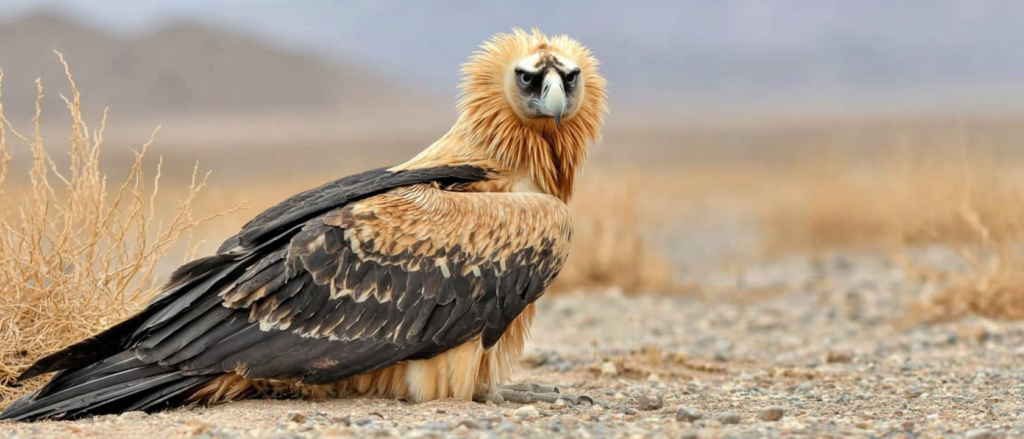
  • The Majestic Bearded Vulture of the Gobi Desert: Mongolia’s Bone-Breaking Raptor

    The Majestic Bearded Vulture of the Gobi Desert: Mongolia’s Bone-Breaking Raptor

    The bearded vulture, also known as the lammergeier, represents one of the most extraordinary bird species inhabiting the Gobi Desert of Mongolia. This magnificent raptor has adapted to survive in one of Earth’s harshest environments, making the bearded vulture Gobi population a subject of fascination for ornithologists and wildlife enthusiasts worldwide. The lammergeier’s presence in the Gobi Desert ecosystem demonstrates remarkable evolutionary adaptation to extreme conditions that would challenge most avian species.

    What is a Bearded Vulture?

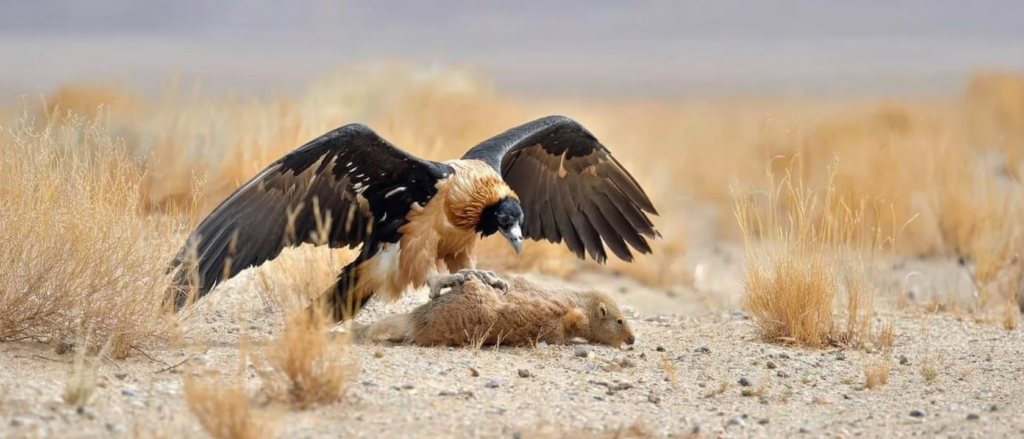
    The bearded vulture (Gypaetus barbatus) stands apart from other vulture species through its unique appearance and feeding habits. Unlike typical vultures, the bearded vulture exhibits striking plumage that ranges from golden-orange to rust-red on its body, contrasted by dark wings and a distinctive black facial mask. The bird derives its common name from the conspicuous black feathers forming a beard-like tuft beneath its beak, giving the lammergeier an almost mythical appearance as it soars through Gobi Desert skies.

    Adult bearded vultures measure between 94 and 125 centimeters in length, with an impressive wingspan reaching up to 2.8 meters. This substantial size makes the bearded vulture one of the largest birds of prey in the Gobi Desert region. The lammergeier’s wedge-shaped tail distinguishes it from other large raptors, serving as a crucial identification feature when observing bearded vultures in their natural Gobi habitat. Their flight pattern is graceful and deliberate, with the bearded vulture spending hours soaring on thermal currents while surveying vast stretches of Gobi terrain below.

    The orange-red coloration seen in adult bearded vultures actually results from the birds deliberately bathing in iron oxide-rich soil and water. Young lammergeiers display much darker, almost black plumage before gradually transitioning to the characteristic coloration that makes adult bearded vultures so visually striking against the Gobi Desert landscape.

    Bearded Vulture Habitat in the Gobi Desert

    The Gobi Desert provides essential habitat for bearded vulture populations across Mongolia and northern China. These remarkable birds prefer mountainous terrain within the Gobi, particularly areas featuring steep cliffs and rocky gorges. The bearded vulture nests on inaccessible cliff ledges, where pairs establish territories spanning hundreds of square kilometers. The rugged topography of the Gobi creates ideal conditions for lammergeier populations to thrive, with countless nesting sites protected by sheer rock faces.

    bearded vulture of the gobi desert

    The Gobi Gurvan Saikhan National Park serves as a critical stronghold for bearded vulture conservation in Mongolia. Within this protected area, the famous Yolyn Am valley, also called the Valley of the Eagles, provides optimal bearded vulture habitat. The deep, narrow gorge maintains ice formations well into summer, creating a microclimate that supports the ecosystem upon which bearded vultures depend. This unique environment attracts wildlife photographers and birders from around the world, all hoping to glimpse the magnificent bearded vulture in its natural Gobi setting.

    Bearded vultures in the Gobi have adapted to extreme temperature variations, from scorching summer heat exceeding 40°C to harsh winters plunging below -40°C. The Gobi’s sparse vegetation and rugged landscape suit the bearded vulture’s soaring lifestyle, as thermal updrafts along mountain ridges enable these birds to cover vast distances while searching for food. A single bearded vulture may patrol an area exceeding 300 square kilometers daily, demonstrating the extensive habitat requirements of Gobi lammergeier populations.

    The elevation preferences of bearded vultures in the Gobi typically range from 1,000 to 3,000 meters above sea level, where rocky outcrops and cliff formations provide suitable nesting sites. During winter months, some Gobi bearded vultures may descend to lower elevations where food availability increases, though most resident pairs remain within their established territories year-round.

    The Bone-Breaking Behavior of Bearded Vultures

    What truly distinguishes the bearded vulture from other scavengers is its remarkable bone-breaking feeding strategy. The lammergeier specializes in consuming bone marrow, deriving approximately 90% of its diet from skeletal remains that other scavengers leave behind. This unique niche allows bearded vultures to thrive in the Gobi Desert, where competition for carrion can be intense. While other vultures fight over soft tissues, the bearded vulture patiently waits to claim the bones that remain.

    Bearded vultures employ a dramatic hunting technique called ossifragy, carrying bones high into the air before dropping them onto rocky surfaces below. The impact shatters larger bones, exposing the nutritious marrow within. A single bearded vulture may make multiple flights to break particularly large bones, demonstrating remarkable persistence and problem-solving abilities. Observers in the Gobi have documented lammergeiers carrying bones weighing up to four kilograms to heights exceeding 80 meters before releasing them.

    The bone-breaking behavior of bearded vultures requires considerable skill and experience. Young lammergeiers initially struggle with accuracy, often missing their target zones or selecting inappropriate dropping sites. Through trial and error over several years, Gobi bearded vultures learn to identify the most effective rocky platforms and develop the precision necessary to shatter bones efficiently. Some individual bearded vultures in the Gobi establish preferred dropping sites, returning repeatedly to the same locations where accumulated bone fragments testify to years of use.

    The digestive system of the bearded vulture has evolved specifically for processing bone material. Their powerful stomach acids can dissolve bone fragments completely, extracting essential calcium and other minerals. Young bearded vultures learn the bone-breaking technique through observation, refining their accuracy over several years before mastering this essential survival skill. The lammergeier’s specialized digestive enzymes allow these birds to process materials that would be indigestible to virtually any other vertebrate species.

    Bearded Vulture Diet and Feeding Ecology

    Beyond bones, the bearded vulture diet includes tortoise shells, horns, and occasionally small live prey such as hyraxes or marmots in other parts of their range. In the Gobi Desert ecosystem, bearded vultures primarily scavenge from the carcasses of ibex, argali sheep, and domestic livestock. The lammergeier’s role as a bone specialist complements other scavengers, ensuring complete nutrient recycling within the harsh Gobi environment. This ecological function makes bearded vultures essential to maintaining the health of Gobi Desert ecosystems.

    bearded vulture of the gobi desert catching and eating marmot

    Bearded vultures require substantial daily food intake, consuming approximately 250-400 grams of bone material per day. Juvenile bearded vultures receive regurgitated bone fragments from their parents, with the bones becoming progressively larger as the young birds develop stronger digestive capabilities. This specialized feeding strategy means bearded vulture populations depend on healthy ungulate populations within their Gobi Desert territories.

    The feeding ecology of Gobi bearded vultures also includes opportunistic predation on smaller animals when available. Though rare, lammergeiers have been observed capturing live tortoises, which they drop from height to break open the shells. During particularly harsh winters in the Gobi, bearded vultures may supplement their bone-based diet with frozen carrion and occasional small mammals, demonstrating dietary flexibility that aids survival in this unforgiving environment.

    Bearded Vulture Breeding and Life Cycle

    Bearded vultures form monogamous pairs that maintain lifelong bonds, defending their Gobi Desert territories year-round. The breeding season begins during the coldest months, with bearded vultures laying eggs between December and February. This timing ensures that chicks fledge during spring and early summer when food availability peaks across the Gobi. The counter-intuitive winter breeding strategy of bearded vultures reflects the extended developmental period required for young lammergeiers to reach independence.

    Female bearded vultures typically lay one to two eggs in massive nests constructed from sticks, bones, and lined with wool and animal hair. The nest sites on Gobi cliff faces offer protection from ground predators and harsh weather. Both parents share incubation duties over approximately 55 days, rarely leaving the eggs exposed to the extreme Gobi climate. Some bearded vulture nests in the Gobi Desert have been used continuously for decades, with pairs adding new material each breeding season until the structures reach impressive dimensions exceeding two meters in diameter.

    Young bearded vultures remain dependent on their parents for four to five months after fledging. Juvenile lammergeiers display darker plumage than adults, gradually acquiring the characteristic golden-orange coloration over seven to eight years. This extended maturation period means bearded vulture populations grow slowly, making conservation efforts particularly critical for Gobi populations. Bearded vultures don’t reach breeding maturity until approximately seven years of age, further limiting population growth rates even under ideal conditions.

    The parental investment required by bearded vultures ranks among the highest of any bird species. Gobi bearded vulture pairs typically raise only one chick every two years successfully, with the older, stronger chick often outcompeting its sibling in two-egg clutches. This reproductive strategy, while limiting population expansion, ensures that successfully fledged young bearded vultures receive maximum parental attention and have the best possible chance of survival.

    Conservation Status of Gobi Bearded Vultures

    The bearded vulture faces conservation challenges throughout its range, including populations in the Gobi Desert. International conservation organizations classify the lammergeier as Near Threatened globally, though specific Gobi populations face varying degrees of risk. Habitat loss, poisoning, and declining prey populations threaten bearded vulture numbers across Mongolia. The Gobi bearded vulture population represents one of the healthier populations globally, yet even these birds face mounting pressures from human activities.

    Mongolian conservation programs focus on protecting bearded vulture breeding sites within national parks and nature reserves. Research initiatives track Gobi bearded vulture populations through systematic surveys and satellite telemetry studies. These efforts provide crucial data on movement patterns, territory sizes, and survival rates for bearded vultures inhabiting the Gobi Desert ecosystem. Collaborative projects between Mongolian scientists and international researchers have revealed that Gobi bearded vulture territories average approximately 30-40 square kilometers, with some pairs requiring even larger ranges.

    Poisoning represents a severe threat to bearded vultures, particularly from pesticides and poisons intended for wolves but consumed by scavenging birds. Educational campaigns in Mongolia aim to reduce poison use near bearded vulture habitats. Additionally, declining populations of wild ungulates in parts of the Gobi reduce available food resources for lammergeiers and other scavengers. Climate change effects on Gobi ecosystems may further impact bearded vulture prey availability, creating cascading effects throughout the food web.

    Community-based conservation initiatives engage local herders in protecting bearded vulture nesting sites. Some programs provide incentives for communities that maintain healthy lammergeier populations within their traditional grazing areas. These grassroots efforts complement government protection measures, creating comprehensive conservation strategies for Gobi bearded vultures.

    Observing Bearded Vultures in the Gobi Desert

    Wildlife enthusiasts seeking to observe bearded vultures should visit the Gobi Desert between April and October when weather conditions allow comfortable travel. Yolyn Am in Gobi Gurvan Saikhan National Park offers the best opportunities for bearded vulture sightings, with resident pairs frequently soaring along the gorge walls. The dramatic landscape of Yolyn Am provides not only excellent bearded vulture habitat but also stunning photographic opportunities for visitors documenting these magnificent birds.

    Early morning hours provide optimal bearded vulture viewing opportunities when these magnificent birds become active, riding thermal currents while searching for food. Patient observers scanning the sky above rocky outcrops and cliffs often spot the distinctive silhouette of bearded vultures, recognizing them by their diamond-shaped tail and contrasting plumage patterns. Binoculars or spotting scopes significantly enhance bearded vulture viewing experiences, allowing observers to appreciate the intricate plumage details and observe bone-dropping behavior from respectful distances.

    Tips for spotting bearded vultures in the Gobi:

    • Visit during early morning or late afternoon when lammergeiers are most active
    • Focus observations on cliff faces and rocky gorges where bearded vultures nest
    • Look for characteristic soaring patterns with minimal wing flapping
    • Listen for the distinctive whistling calls that bearded vultures occasionally produce

    Local guides familiar with bearded vulture territories significantly improve sighting chances throughout the Gobi region. These experts understand seasonal movement patterns and can identify favored roosting sites where lammergeiers rest during midday heat. Respectful observation from appropriate distances ensures minimal disturbance to these sensitive raptors. Photography enthusiasts should use telephoto lenses to capture bearded vulture images without approaching nesting areas or causing disturbance.

    Several tour operators in Mongolia specialize in wildlife-focused expeditions to Gobi Desert bearded vulture habitat. These organized trips combine comfortable accommodations with expert guidance, maximizing opportunities to observe lammergeiers while supporting local conservation efforts through tourism revenue.

    Cultural Significance of Bearded Vultures

    In Mongolian culture, the bearded vulture holds special significance as a symbol of the untamed Gobi wilderness. Traditional Mongolian names for the lammergeier reflect respect for this powerful bird and recognition of its unique ecological role. Nomadic herders sharing the Gobi landscape with bearded vultures have coexisted with these birds for centuries, developing deep knowledge of lammergeier behavior and ecology.

    Folklore throughout the Gobi region includes stories featuring bearded vultures, often portraying the lammergeier as a wise and powerful spirit of the mountains. This cultural reverence contributes to local tolerance of bearded vultures, even when occasional conflicts arise over livestock carcasses. The distinctive appearance and dramatic bone-dropping behavior of lammergeiers have captured human imagination across generations of Gobi Desert inhabitants.

    The Future of Bearded Vultures in the Gobi

    Protecting bearded vulture populations in the Gobi Desert requires continued conservation commitment from Mongolia and international partners. Expanding protected areas, reducing human-wildlife conflict, and maintaining healthy prey populations will determine whether future generations can witness these extraordinary bone-breaking raptors soaring above the Gobi’s dramatic landscapes. The Gobi Desert represents a global stronghold for bearded vultures, making Mongolian conservation efforts critically important for the species’ overall survival.

    Climate change poses additional challenges for Gobi bearded vultures as shifting weather patterns affect prey availability and breeding success. Long-term monitoring programs tracking bearded vulture populations provide early warning of population declines, enabling rapid conservation responses. Researchers predict that successful bearded vulture conservation in the Gobi will require adaptive management strategies that account for changing environmental conditions.

    The bearded vulture of the Gobi Desert represents a remarkable example of evolutionary adaptation to extreme environments. As apex scavengers specializing in the most challenging food sources, lammergeiers demonstrate nature’s ingenuity in exploiting every available niche. Ensuring the survival of Gobi bearded vulture populations preserves not only a magnificent species but also the ecological integrity of one of Asia’s most iconic wilderness areas. Every bearded vulture soaring above the Gobi‘s ancient mountains serves as a testament to the resilience of life in Earth’s harshest landscapes and a reminder of our responsibility to protect these irreplaceable natural treasures.

  • The Magnificent Argali Sheep of the Gobi Desert: World’s Largest Wild Sheep

    The Magnificent Argali Sheep of the Gobi Desert: World’s Largest Wild Sheep

    The Argali sheep stands as the world’s largest wild sheep species, commanding attention across the vast expanses of the Gobi Desert with its imposing size and spectacular spiral horns. This remarkable ungulate has adapted to thrive in Mongolia’s most challenging environments, making the Argali sheep Gobi population a crown jewel of Central Asian wildlife. The sheer majesty of mature Argali rams with their massive curling horns represents one of nature’s most impressive displays of evolutionary adaptation and survival.

    What is an Argali Sheep?

    The Argali sheep (Ovis ammon), known locally in Mongolia as “argal,” represents the largest species within the wild sheep family Caprinae. These magnificent animals display dramatic sexual dimorphism, with adult male Argali significantly outweighing females. Mature Argali rams in the Gobi Desert can reach weights between 90 and 180 kilograms, while females typically weigh 50 to 90 kilograms. The size variation among Argali sheep populations depends partly on subspecies and habitat quality, with Gobi Argali representing one of several recognized subspecies across Central Asia.

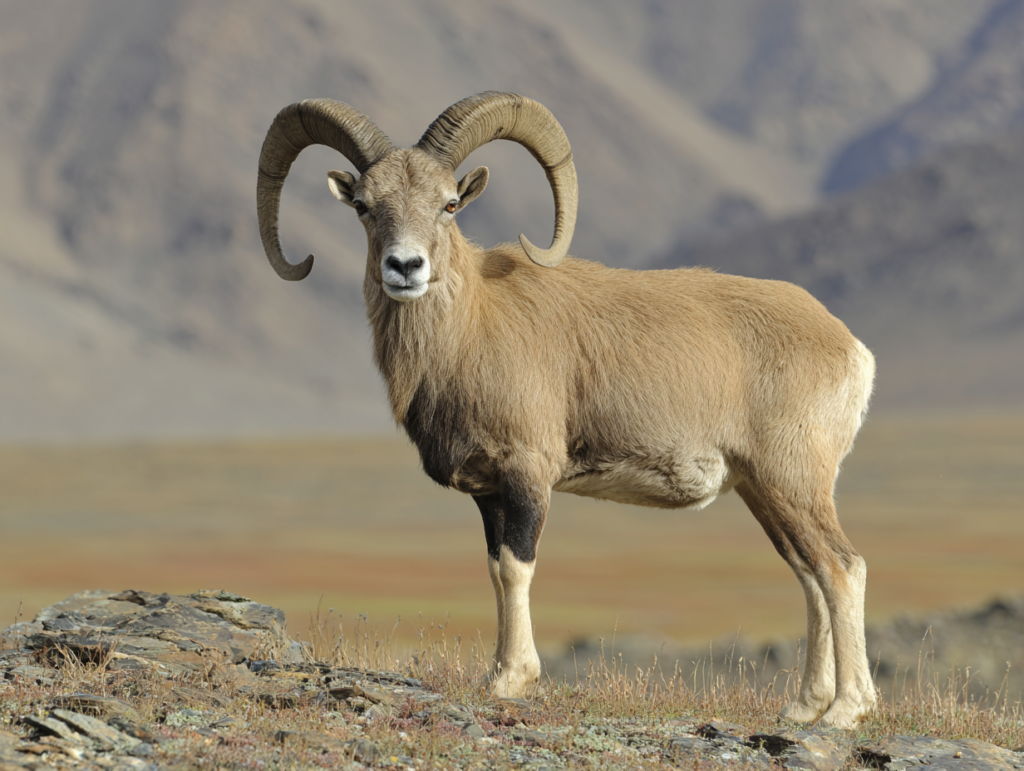
    male mongolian argali sheep on top of a mountain in Mongolia

    The most distinctive feature of Argali sheep is undoubtedly the enormous horns carried by males. These impressive structures spiral outward and backward in a graceful curve that can span more than 190 centimeters when measured along the outer curve. The horns of record-class Argali rams may weigh over 23 kilograms combined, representing one of the heaviest horn sets among all wild sheep species worldwide. Female Argali possess much smaller, slightly curved horns that rarely exceed 30 centimeters in length.

    The body structure of Argali sheep reflects their adaptation to open terrain and mountainous landscapes. Long, sturdy legs enable these wild sheep to cover vast distances across the Gobi Desert while foraging and to navigate steep slopes when necessary. The Argali pelage varies seasonally, with summer coats appearing relatively short and light brown to grayish-brown in color. Winter brings dramatic coat changes, as Argali sheep develop thick, woolly undercoats covered by longer guard hairs that provide insulation against the Gobi’s brutal cold.

    Argali sheep display distinctive white or light-colored patches on their rump, belly, and legs that create striking contrast against their darker body coloration. The face of mature Argali rams often appears lighter than the body, sometimes nearly white in older individuals. A prominent dark dorsal stripe runs along the spine of many Argali, adding to their distinctive appearance. These color patterns help wildlife observers identify Argali sheep from considerable distances across the open Gobi landscape.

    The physical proportions of Argali sheep convey power and endurance, with deep chests housing large lungs adapted for high-altitude environments and muscular hindquarters providing explosive speed when escaping predators. Adult Argali stand approximately 110 to 125 centimeters tall at the shoulder, making them substantially larger than domestic sheep and most other wild sheep species. This impressive size offers advantages in the harsh Gobi environment but also increases nutritional requirements and makes Argali more conspicuous to predators.

    Argali Sheep Habitat in the Gobi Desert

    The Gobi Desert provides extensive habitat for Argali sheep populations across Mongolia and northern China. Unlike animals requiring dense vegetation cover, Argali sheep thrive in open terrain where their exceptional eyesight and running ability provide primary defenses against predators. The typical Argali habitat in the Gobi consists of rolling hills, mountain slopes, plateaus, and valleys where vegetation grows sparsely but supports the grazing needs of these large herbivores.

    Argali sheep demonstrate remarkable habitat flexibility across elevation gradients, occupying areas from approximately 1,000 meters to over 5,000 meters above sea level in some mountain ranges. Within the Gobi Desert region, Argali populations concentrate in areas offering the optimal combination of forage availability, water access, and terrain suitable for detecting and escaping from predators. The transitional zones between mountains and desert basins provide particularly important Argali habitat, supporting some of the highest population densities in Mongolia.

    The Gobi Gurvan Saikhan National Park protects critical Argali sheep habitat in southern Mongolia, with populations utilizing both mountainous areas and adjacent rolling terrain. The Altai Mountains of western Mongolia support substantial Argali populations, with these wild sheep ranging across some of the most spectacular wilderness landscapes in Central Asia. The Great Gobi Strictly Protected Area, encompassing vast stretches of southwestern Mongolia, provides refuge for Argali herds that migrate seasonally across enormous territories.

    Seasonal habitat use by Argali sheep follows predictable patterns driven by vegetation phenology, weather conditions, and reproductive cycles. During summer months, Gobi Argali typically occupy higher elevations and northern-facing slopes where vegetation remains relatively green and temperatures stay moderate. Alpine meadows and subalpine zones provide optimal summer habitat for Argali herds, offering abundant forage and escape terrain. As autumn progresses, Argali sheep begin moving toward lower elevations and southern exposures where snow accumulation remains minimal during winter.

    Winter habitat selection by Argali in the Gobi focuses on wind-swept ridges and south-facing slopes where snow cover stays shallow and dried vegetation remains accessible. The ability of Argali sheep to survive winter in the Gobi depends heavily on finding areas where they can efficiently access forage without expending excessive energy breaking through deep snow. Rocky outcrops and cliff faces provide shelter from harsh winds, creating microhabitats that Argali utilize during the most severe weather.

    Water availability influences Argali distribution patterns across the Gobi, particularly during hot summer months when these large-bodied sheep require regular drinking. Natural springs, seasonal streams, and artificial water sources installed for livestock all attract Argali herds. However, Argali sheep demonstrate considerable drought tolerance, obtaining moisture from vegetation and capable of traveling long distances between water sources when necessary.

    Argali Sheep Diet and Feeding Ecology

    The Argali sheep functions as a grazing specialist, consuming primarily grasses and grass-like plants that dominate many Gobi Desert habitats. As herbivores with high nutritional demands due to their large body size, Argali sheep must spend substantial portions of each day foraging to meet energy requirements. The diet composition of Gobi Argali varies seasonally based on plant availability, with these adaptable feeders shifting consumption patterns as different vegetation becomes available throughout the year.

    During the brief but productive growing season following spring rains, Argali sheep focus heavily on fresh green grasses and forbs that provide maximum nutrition. The ephemeral vegetation that appears across the Gobi after precipitation represents crucial forage resources for Argali populations, allowing these wild sheep to build body condition before the harsh winter. Preferred forage species include various grasses from genera such as Stipa, Agropyron, and Festuca, along with numerous forb species that add dietary diversity.

    Summer feeding patterns of Argali sheep involve extensive daily movements across their home ranges to locate the most nutritious vegetation. A typical Argali herd may travel 5 to 15 kilometers daily while foraging, utilizing different aspects and elevations to find optimal forage. Early morning and late afternoon represent peak feeding periods for Gobi Argali, with midday hours spent resting and ruminating in sheltered locations. This activity pattern helps Argali minimize heat stress during summer while maximizing foraging efficiency.

    Winter presents severe feeding challenges for Argali sheep in the Gobi Desert as vegetation becomes dormant and snow may cover available forage. The winter diet of Argali consists primarily of dried grasses, sedges, and browse from low shrubs when accessible. Argali sheep use their hooves to dig through moderate snow depths to reach buried vegetation, though deep snow significantly reduces foraging efficiency. The nutritional quality of winter forage in the Gobi remains relatively poor, forcing Argali to consume large quantities to maintain body condition.

    The digestive physiology of Argali sheep features a complex rumen system that enables efficient processing of fibrous plant material typical of arid environments. As ruminants, Argali sheep chew cud during resting periods, breaking down tough vegetation through microbial fermentation. This digestive strategy allows Argali to extract maximum nutrition from the often poor-quality forage available across much of their Gobi Desert range. The ability to thrive on relatively sparse vegetation represents a crucial adaptation enabling Argali populations to persist in these harsh environments.

    Competition for forage between Argali sheep and domestic livestock represents an increasing concern across the Gobi region. The extensive grazing by domestic sheep and goats reduces available vegetation for wild Argali, particularly in areas where livestock numbers exceed the land’s carrying capacity. Overgrazing by livestock can degrade Argali habitat, eliminating preferred forage species and increasing erosion that further reduces vegetation productivity. Conservation programs increasingly recognize that managing livestock grazing pressure is essential for maintaining healthy Argali populations.

    Social Structure and Behavior of Argali Sheep

    Argali sheep exhibit complex social organization that varies by season, sex, and age. For most of the year, adult male Argali form bachelor groups separate from female herds, with these all-male bands typically numbering from 3 to 20 individuals. The bachelor groups of Argali rams often remain in more exposed, open terrain where their size and horns provide advantages in detecting and deterring predators. Dominance hierarchies within male groups are established through horn clashes and displays, with age and horn size determining social rank.

    Female Argali sheep and their offspring form maternal herds that serve as the basic social unit for much of the year. These nursery groups typically contain 5 to 30 animals but may aggregate into larger assemblages exceeding 100 individuals in areas with abundant resources. The social bonds within female Argali herds provide multiple benefits including enhanced predator detection, cooperative lamb rearing, and information sharing about resource locations. Experienced older ewes typically lead movements of Argali herds, drawing on their knowledge of traditional migration routes and seasonal ranges.

    The vigilance behavior of Argali sheep reflects constant awareness of predation risk despite their large size and open habitat preferences. Argali herds maintain spacing that allows all individuals to monitor surroundings while feeding, with at least some animals typically alert and scanning for threats. When danger appears, Argali communicate alarm through body postures, snorting vocalizations, and rapid running that alerts other herd members. The alarm system of Argali herds functions effectively to warn of approaching predators, giving the group time to flee.

    Daily activity patterns of Argali sheep include extended resting and rumination periods between feeding bouts. Rest sites selected by Argali typically offer good visibility across surrounding terrain, allowing the sheep to detect approaching threats while digesting food. During hot summer days, Argali often seek shade beneath rock overhangs or in gullies during midday hours, resuming active feeding only as temperatures moderate in late afternoon. Winter activity patterns shift toward increased feeding time as Argali must process larger quantities of lower-quality forage to meet nutritional needs.

    The home range size of Argali sheep in the Gobi Desert varies considerably based on habitat quality and seasonal movements. Some Argali populations remain relatively sedentary, occupying home ranges of 20 to 50 square kilometers year-round where resources remain adequate. Other Argali herds migrate seasonally across distances exceeding 100 kilometers between summer and winter ranges, following traditional routes passed down through generations. These migration patterns reflect the patchy distribution of resources across the Gobi landscape and the need to track vegetation phenology across elevation gradients.

    Argali Sheep Breeding Season and Reproduction

    The breeding season for Argali sheep in the Gobi Desert occurs during late autumn and early winter, typically from November through December. This timing ensures that lambs are born in late spring when weather moderates and vegetation begins growing, providing optimal conditions for newborn survival and maternal nutrition. The rut transforms the behavior of male Argali dramatically as bachelor groups dissolve and mature rams seek out female herds to compete for breeding opportunities.

    Dominant male Argali establish temporary breeding territories centered on female groups during the rut, defending their access to receptive ewes against rival males. The competition between Argali rams involves spectacular displays and violent combat that tests the strength and determination of competing males. Rivals approach each other, rear up on hind legs, and crash together with tremendous force, their massive horns absorbing impacts that would seriously injure animals lacking such protection. These horn clashes between Argali rams produce loud cracking sounds audible from great distances across the Gobi, advertising the intensity of reproductive competition.

    The fighting strategy of male Argali emphasizes endurance over quick resolution, with breeding contests sometimes lasting for hours as rivals repeatedly clash and circle each other. Horn size correlates strongly with fighting success among Argali rams, as larger horns deliver more powerful blows and provide superior defense. The energetic costs of rutting activity are substantial, with dominant Argali males losing significant body condition during the breeding season as they minimize feeding to focus on securing mating opportunities.

    Female Argali sheep reach sexual maturity at approximately two years of age, though many don’t breed successfully until their third year. Male Argali mature physically later, typically not competing effectively for breeding until five to seven years old when their horns and body mass reach competitive sizes. The gestation period for Argali sheep lasts approximately 160 days, with most Gobi populations giving birth in May and June. Female Argali typically produce single lambs, though twins occur occasionally in populations with access to high-quality nutrition.

    Newborn Argali lambs demonstrate remarkable precociousness, standing and nursing within hours of birth and following their mothers across steep terrain within days. The growth rate of Argali lambs during their first summer is rapid, as young sheep must reach substantial size before facing their first winter. Female Argali are attentive mothers, nursing lambs for three to four months while teaching them essential survival skills including predator recognition and optimal foraging strategies. Maternal investment extends beyond weaning, with young Argali remaining closely associated with their mothers through their first year.

    Lamb survival rates in Argali populations vary considerably based on environmental conditions and predation pressure. Harsh weather during the birth season, particularly late spring snowstorms, can cause significant lamb mortality. Predation on young Argali by wolves, snow leopards, and eagles represents another major source of mortality. Despite these challenges, Argali populations in the Gobi generally maintain adequate reproduction rates to sustain stable or growing populations under favorable management conditions.

    Predators and Survival Challenges

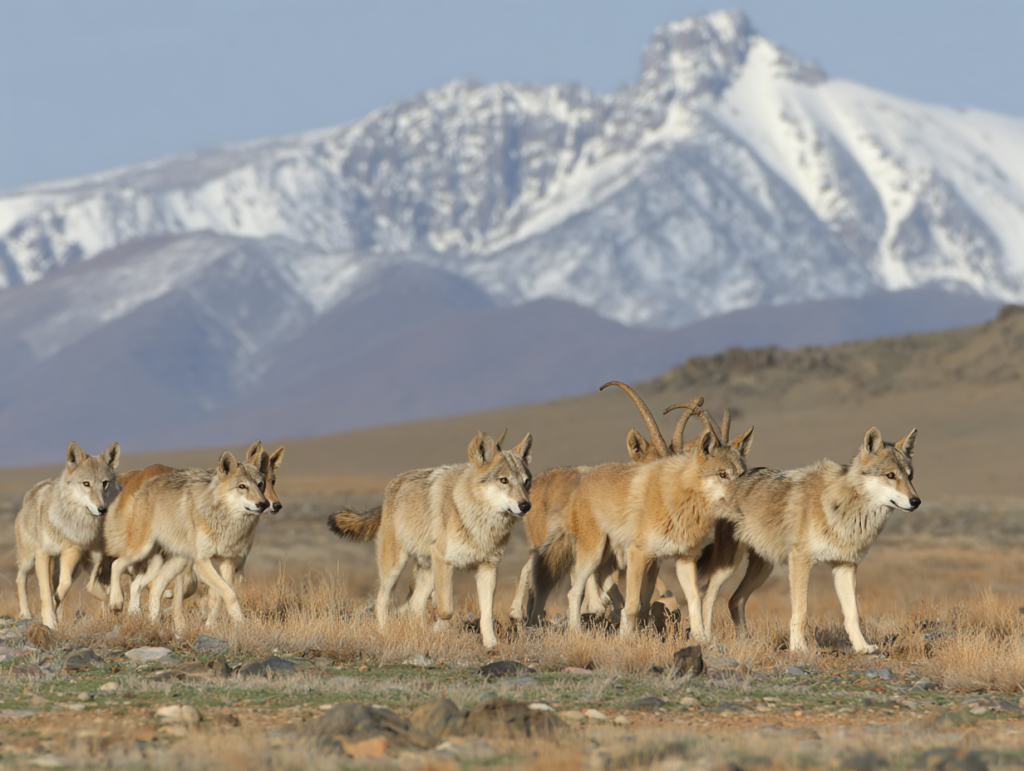
    The Argali sheep faces predation from several carnivore species within the Gobi Desert ecosystem, with wolves representing the most significant threat throughout most of their range. Wolf packs hunt Argali cooperatively, with coordinated attacks enabling these predators to bring down even large adult rams. The open terrain preferred by Argali provides some advantages for detecting approaching wolves, but successful hunts occur regularly as wolf packs employ sophisticated hunting strategies. Winter conditions increase Argali vulnerability to wolf predation as deep snow hampers the sheep’s mobility while wolves travel more efficiently.

    wolf packs hunt mongolian argali sheep cooperativly

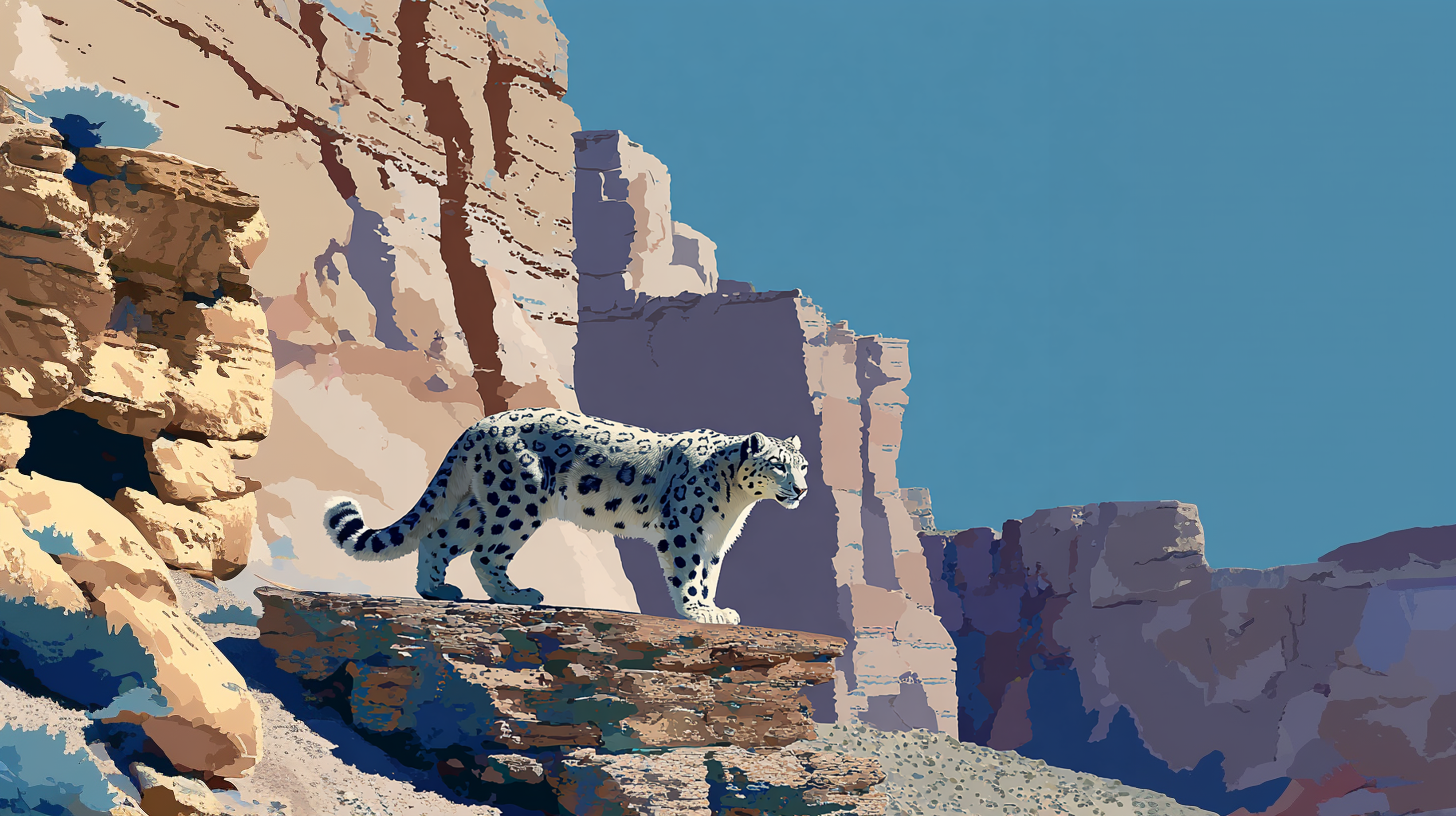
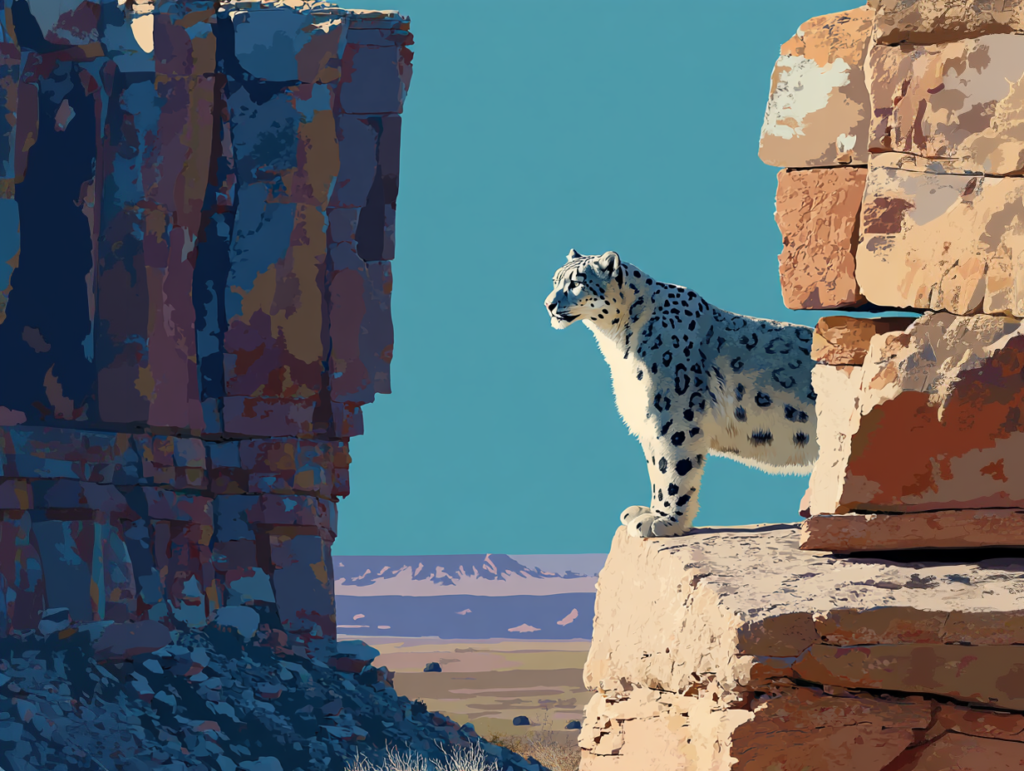
    Snow leopards prey on Argali sheep in mountainous areas where the ranges of these species overlap. These solitary cats stalk Argali using terrain and vegetation for concealment before launching explosive ambush attacks. The powerful build of snow leopards enables them to kill adult Argali, though these predators more commonly target younger or weakened individuals. The relationship between snow leopards and Argali influences the habitat use and vigilance behavior of both species across the Gobi’s mountain ranges.

    Golden eagles occasionally prey on young Argali lambs, particularly during the first weeks after birth when lambs remain relatively small and inexperienced. These aerial predators dive from great heights to strike young sheep, relying on surprise and powerful talons to subdue prey. Lynx and foxes may also opportunistically prey on newborn Argali lambs, though these smaller predators cannot threaten healthy adults. The diverse predator community exerts continuous selection pressure on Argali populations, favoring vigilant animals with strong flight responses.

    Beyond predation, Argali sheep in the Gobi Desert face numerous environmental challenges that test their survival adaptations. Winter conditions represent the most critical period for Argali, with brutal cold, limited food availability, and potential snow cover combining to create harsh circumstances. Deep snow events that exceed 30 centimeters depth significantly impair Argali foraging efficiency, forcing these large sheep to expend substantial energy accessing buried vegetation. Prolonged severe winters cause mortality through starvation and cold stress, particularly affecting young, old, and pregnant individuals.

    Disease represents an often underappreciated threat to Argali populations, with various pathogens capable of causing mortality or reducing fitness. Pneumonia and other respiratory infections pose risks to Argali herds, especially when animals are stressed by poor nutrition or harsh weather. Parasites including various internal worms and external ticks affect Argali health, with heavy parasite loads potentially debilitating infected animals. Disease transmission between domestic livestock and wild Argali remains a conservation concern, as novel pathogens from livestock could devastate naïve Argali populations.

    Conservation Status and Threats

    The Argali sheep holds a conservation status of Near Threatened globally according to international assessments, reflecting population declines across portions of the species’ range and ongoing threats to remaining populations. However, the conservation situation varies considerably among different Argali subspecies and populations. Gobi Desert Argali populations in Mongolia remain relatively healthy compared to some other regions, though these populations still require active conservation management to ensure long-term viability.

    Hunting pressure represents one of the most significant threats to Argali sheep populations across their range. The impressive horns of mature Argali rams make them highly desirable trophies for sport hunters, creating economic incentives for both legal and illegal harvest. Mongolia permits limited trophy hunting of Argali under government quota systems designed to generate conservation funding while allowing sustainable use. When properly regulated and enforced, sport hunting programs can benefit Argali conservation by providing economic value to communities living near these wild sheep. However, illegal poaching of Argali continues in some areas, driven by demand for horns in traditional medicine markets and as trophies.

    Habitat loss and degradation threaten Argali populations as human activities expand across the Gobi Desert region. Mining operations, infrastructure development, and expanding settlements reduce available Argali habitat while creating barriers to traditional movement patterns. The fragmentation of Argali habitat isolates populations, reducing genetic diversity and making herds more vulnerable to local extinctions. Roads and fencing associated with development can restrict Argali movements between seasonal ranges, preventing access to critical resources.

    Competition with domestic livestock for forage and water represents an escalating challenge for Argali conservation in the Gobi. The number of domestic sheep and goats grazing across Mongolia has increased substantially in recent decades, with these livestock utilizing many of the same habitats as wild Argali. Heavy livestock grazing can degrade vegetation communities, reducing forage quality and quantity for wild sheep. Competition is particularly intense during winter and drought periods when forage becomes scarce across the landscape.

    Protected areas provide crucial refuges for Argali populations across the Gobi Desert, with national parks and nature reserves restricting hunting and limiting habitat disturbance. The expansion and effective management of protected area networks represents a cornerstone of Argali conservation strategy in Mongolia. However, protected areas alone cannot ensure Argali survival, as these wild sheep require vast landscapes that extend beyond reserve boundaries. Effective Argali conservation requires landscape-level approaches that maintain habitat connectivity and manage human activities across entire ecosystems.

    Community-based conservation programs engage local herders and communities in protecting Argali populations while addressing the livelihood needs of rural people. These initiatives recognize that conservation success depends on building local support and providing tangible benefits from wildlife. Some programs share revenue from sport hunting with communities that protect Argali habitat, creating economic incentives for conservation. Other approaches focus on reducing livestock-Argali competition through improved grazing management and establishing wildlife-friendly practices.

    Observing Argali Sheep in the Gobi Desert

    Wildlife enthusiasts visiting the Gobi Desert have opportunities to observe Argali sheep in their natural habitat, though sightings require patience, good planning, and often considerable luck. The vast open landscapes inhabited by Argali mean these animals can be spotted from great distances, but locating herds across millions of hectares of potential habitat presents obvious challenges. The best viewing opportunities occur during autumn when Argali congregate for the breeding season and males become less wary due to rutting behavior.

    Several protected areas in Mongolia offer accessible Argali habitat where visitors may encounter these magnificent wild sheep. The Gobi Gurvan Saikhan National Park provides infrastructure for visitors while protecting important Argali populations. The Altai Tavan Bogd National Park in western Mongolia’s Altai Mountains offers spectacular scenery along with opportunities to observe Argali in alpine settings. Tour operators specializing in Gobi wildlife expeditions employ experienced guides familiar with Argali distribution and behavior, significantly improving chances of successful sightings.

    Tips for spotting Argali sheep in the Gobi:

    • Scan distant hillsides and ridgelines systematically using quality binoculars or spotting scopes
    • Focus searches on rolling terrain and mountain foothills at dawn and dusk
    • Look for movement and the distinctive silhouettes of large horned sheep
    • Visit during October and November to observe breeding behavior and maximize sighting opportunities
    • Hire local guides with intimate knowledge of Argali movements and preferred habitats

    Photographing Argali sheep requires telephoto lenses of 400mm or longer focal length, as these wary animals typically maintain considerable distance from humans. The wariness of Argali presents challenges for close photography, requiring photographers to use terrain and patient approaches to get within reasonable range. The dramatic Gobi landscapes provide stunning backdrops for Argali images, with golden hour lighting especially favorable for capturing these magnificent animals against expansive wilderness vistas.

    Observing Argali sheep demands physical preparation as viewing locations often involve driving across rough terrain followed by hiking across rugged landscapes. The elevation and exposure typical of Argali habitat require appropriate clothing and equipment to handle temperature extremes and unpredictable weather. Despite the challenges, successfully observing wild Argali rams with their massive spiraling horns ranks among the most memorable wildlife experiences available in Central Asia.

    Cultural and Economic Significance

    The Argali sheep holds deep cultural significance for people of the Gobi Desert region, featuring prominently in traditional practices, folklore, and artistic expressions. Ancient rock art throughout Mongolia depicts Argali, demonstrating the long relationship between these wild sheep and human cultures across Central Asia. The hunting of Argali required skill and endurance in traditional societies, with successful hunters earning respect and providing valuable meat and hides for their communities.

    Modern Mongolia continues to value Argali as both a cultural icon and an economic resource. Trophy hunting programs generate substantial revenue, with wealthy international hunters paying tens of thousands of dollars for permits to hunt record-class Argali rams. This income supports conservation programs, benefits local communities, and provides economic justification for maintaining Argali habitat. The careful management of hunting quotas attempts to balance economic benefits with conservation needs, though debates continue regarding optimal sustainable harvest levels.

    The Future of Argali Sheep in the Gobi

    Ensuring the long-term survival of Argali sheep in the Gobi Desert requires addressing multiple conservation challenges through coordinated management approaches. Maintaining large, connected landscapes where Argali can migrate freely between seasonal ranges represents a fundamental conservation priority. Effective regulation of hunting combined with enforcement against poaching will determine whether impressive trophy rams continue to roam the Gobi. Managing livestock grazing to reduce competition with Argali while supporting pastoral livelihoods demands innovative solutions that benefit both wildlife and people.

    Climate change adds uncertainty to Argali conservation as shifting precipitation patterns and increasing temperatures alter vegetation communities across the Gobi. The resilience of Argali populations to these environmental changes remains unclear, highlighting the need for adaptive management approaches that respond to monitoring data. International cooperation enhances Argali conservation as populations span national boundaries, requiring coordinated policies among Mongolia, China, and other range countries.

    The Argali sheep of the Gobi Desert represents a testament to evolutionary adaptation and the grandeur of Central Asian wildlife. These magnificent animals, with their massive spiraling horns and powerful builds, embody the wild spirit of the Gobi’s vast landscapes. Protecting Argali populations preserves not only an iconic species but also the ecological integrity and cultural heritage of one of Earth’s great wilderness regions. Every Argali herd grazing across the Gobi’s rolling hills connects us to ancient ecosystems and reminds us of our responsibility to ensure these remarkable wild sheep continue thriving for future generations to witness and appreciate.

  • Saiga Antelope: A Living Ice Age Relic of the Gobi and Eurasian Steppe

    Saiga Antelope: A Living Ice Age Relic of the Gobi and Eurasian Steppe

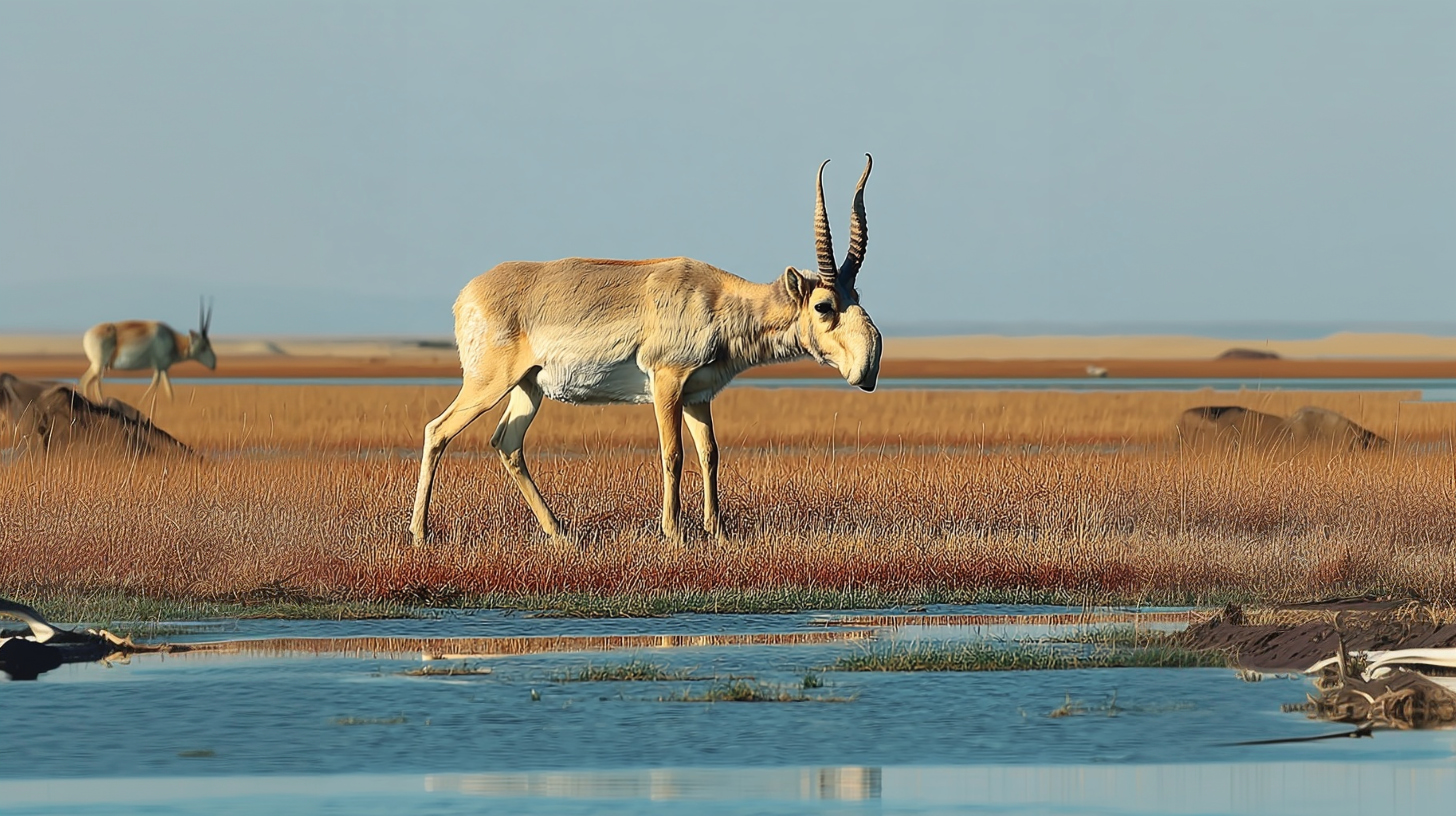
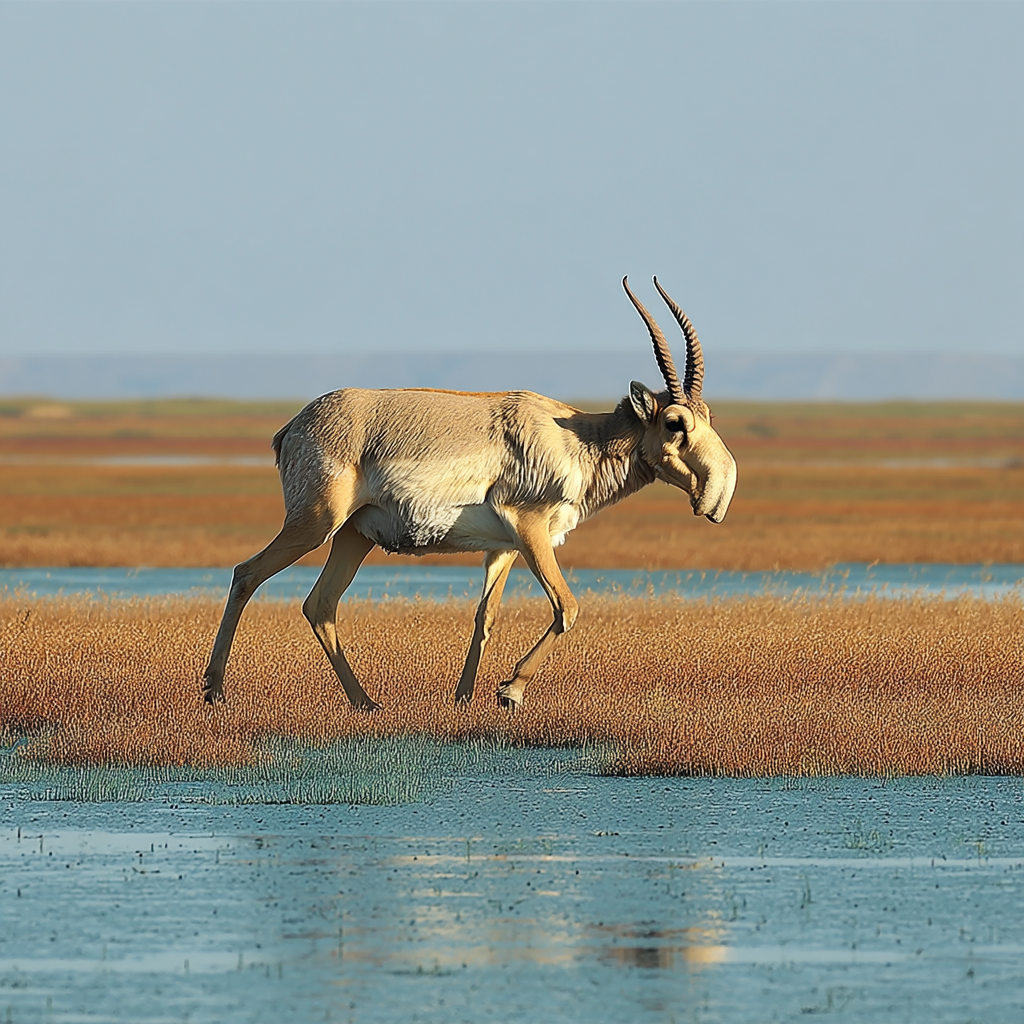
    The Saiga Antelope is one of the most unusual and evolutionarily fascinating mammals on Earth. Instantly recognizable by its large, bulbous, trunk-like nose, the saiga antelope looks like a creature from another era—and in many ways, it is. This remarkable species survived the Ice Age, outlasting mammoths, woolly rhinoceroses, and saber-toothed predators. Today, the saiga antelope remains a living relic of prehistoric Eurasia.

    Once roaming the Eurasian steppe and Gobi region in vast herds numbering in the millions, the saiga antelope played a crucial ecological role across Central Asia. Although its numbers have collapsed dramatically in recent decades, the saiga antelope still persists in remote steppe and semi-desert landscapes, making it one of the most iconic and endangered animals of the Gobi and Central Asian steppe.

    What Is the Saiga Antelope?

    The Saiga Antelope (Saiga tatarica) is a medium-sized antelope species adapted to open grasslands, semi-deserts, and cold steppe environments. Unlike African antelopes, the saiga evolved to survive harsh winters, extreme winds, dust storms, and long seasonal migrations.

    Saiga antelope in the Gobi in Mongolia
    Saiga antelope in the Gobi in Mongolia

    Key characteristics of the saiga antelope include:

    • A large, flexible nose with internal chambers
    • Pale sandy or grayish coat that changes seasonally
    • Slender legs built for endurance running
    • Males with pale, ridged horns (females lack horns)
    • Highly social behavior and massive herd formation

    The saiga antelope is not only unique in appearance but also in ecological function, serving as one of the most important grazing animals of the Eurasian steppe.

    Saiga Antelope: A Survivor of the Ice Age

    The saiga antelope evolved during the Pleistocene epoch, when much of Eurasia was covered by cold, dry grasslands. During this period, saiga antelopes coexisted with megafauna such as mammoths and steppe bison.

    Unlike many Ice Age species, the saiga antelope survived massive climatic shifts, adapting repeatedly to changing conditions. Its success came from:

    • Extreme physiological flexibility
    • Ability to migrate long distances
    • Specialized respiratory adaptations
    • Rapid reproduction during favorable years

    These traits allowed the saiga antelope to endure glacial cycles that wiped out countless other large mammals.

    Unique Adaptations of the Saiga Antelope

    The Iconic Saiga Nose

    The most distinctive feature of the Saiga Antelope is its oversized, downward-facing nose. This extraordinary structure is not decorative—it is essential for survival.

    The saiga’s nose:

    • Filters dust during dry, windy seasons
    • Warms freezing air before it reaches the lungs in winter
    • Cools hot air during summer heat
    • Regulates breathing during long-distance migration

    Inside the nose are complex nasal passages that trap particles and regulate temperature, making the saiga antelope uniquely adapted to the dusty Gobi and steppe environment.

    Seasonal Coat Changes

    The saiga antelope grows a thick, pale winter coat that provides insulation against freezing temperatures and biting winds. In summer, this coat molts into a shorter, lighter coat suited for heat dissipation.

    This seasonal transformation allows the saiga antelope to thrive in regions where temperatures can swing from –40°C in winter to +40°C in summer.

    Speed and Endurance

    Saiga antelopes are built for endurance rather than sprinting. Their long legs and lightweight bodies allow them to:

    • Travel hundreds of kilometers during migration
    • Escape predators through sustained running
    • Move efficiently across flat, open terrain

    This endurance is critical in the vast open landscapes of the Gobi and Eurasian steppe, where cover is minimal.

    Saiga Antelope Habitat

    Where Do Saiga Antelopes Live?

    Historically, saiga antelopes ranged across:

    • Mongolia
    • Kazakhstan
    • Russia
    • Uzbekistan
    • Turkmenistan
    • Western China

    Today, their range is severely fragmented, but saiga antelopes still inhabit:

    • Open steppe grasslands
    • Semi-desert plains
    • Flat, treeless terrain with good visibility

    In the Gobi region, saiga antelopes are found in marginal steppe-desert transition zones where grazing and migration remain possible.

    Why Flat Terrain Matters

    Saiga antelopes rely on visibility and space rather than cover. Flat terrain allows them to:

    • Detect predators at long distances
    • Coordinate herd movement
    • Maintain high migration speed

    Mountainous or heavily forested areas are unsuitable, which makes habitat fragmentation particularly devastating.

    Migration: One of the Greatest Journeys in the Animal Kingdom

    The Saiga Antelope is among the most migratory land mammals on Earth.

    Seasonal Migration Patterns

    Saiga antelopes migrate:

    • Northward in spring to reach calving grounds
    • Southward in autumn to escape extreme winter conditions
    • Along routes that may span hundreds or even thousands of kilometers

    These migrations are driven by:

    • Snow depth
    • Vegetation growth
    • Water availability
    • Predator pressure

    Migration allows saiga antelopes to exploit short-lived grazing opportunities across enormous landscapes.

    Herd Behavior During Migration

    During migration, saiga antelopes form huge herds, sometimes numbering in the tens of thousands. This behavior:

    • Reduces predation risk
    • Improves navigation across open land
    • Enhances reproductive success

    Historically, such herds shaped the entire ecology of the Eurasian steppe.

    Diet and Ecological Role

    What Do Saiga Antelopes Eat?

    The saiga antelope is a selective grazer and browser that feeds on:

    • Steppe grasses
    • Herbs
    • Wormwood
    • Salt-tolerant plants
    • Low-nutrient vegetation avoided by livestock

    This diet allows saiga antelopes to survive in nutrient-poor environments, reducing direct competition with domestic animals.

    Ecological Importance

    The saiga antelope is a keystone species.

    Its ecological roles include:

    • Regulating grassland vegetation
    • Dispersing seeds through dung
    • Supporting predator populations
    • Maintaining open steppe structure

    The disappearance of saiga antelopes has cascading effects across entire ecosystems.

    Predators of the Saiga Antelope

    Natural predators include:

    • Wolves
    • Foxes (primarily targeting calves)
    • Large birds of prey

    Historically, predation pressure was balanced by large herd sizes and migration. Today, human activity poses a far greater threat than natural predators.

    Population Collapse of the Saiga Antelope

    Once Millions, Now Critically Endangered

    At the beginning of the 20th century, saiga antelopes numbered in the millions. Today, populations have collapsed by more than 95%.

    The saiga antelope is now listed as Critically Endangered.

    Major Causes of Decline

    Poaching

    • Saiga horns are used in traditional medicine
    • Only males have horns, skewing sex ratios
    • Organized poaching devastated populations in the 1990s

    Disease Outbreaks

    • Mass die-offs caused by bacterial infections
    • Entire herds lost within days
    • Climate stress increases disease vulnerability

    Habitat Fragmentation

    • Roads, railways, and fences block migration routes
    • Infrastructure prevents access to seasonal grazing
    • Development isolates populations

    Climate Change

    • Increased frequency of extreme weather
    • Unpredictable winters and droughts
    • Disruption of vegetation cycles

    Saiga Antelope Conservation Efforts

    Protection and Recovery Programs

    Conservation efforts focus on:

    • Anti-poaching patrols
    • Removal or modification of migration barriers
    • Disease monitoring
    • Habitat protection
    • International cooperation

    Some populations have shown remarkable recovery when protected effectively.

    Community-Based Conservation

    Successful saiga conservation involves:

    • Engaging local communities
    • Providing alternative livelihoods
    • Education about ecological importance
    • Cross-border cooperation

    Because saiga antelopes migrate across national boundaries, conservation must be international.

    Saiga Antelope and the Gobi Region

    In the Gobi and adjacent steppe zones, saiga antelopes represent a fragile link to the region’s Ice Age past. Their survival here depends on:

    • Preserving open steppe corridors
    • Minimizing infrastructure barriers
    • Protecting marginal desert-steppe habitats

    Saving the saiga antelope helps protect the greater Gobi ecosystem, including other rare species adapted to extreme environments.

    Cultural and Historical Significance

    For centuries, saiga antelopes featured in:

    • Steppe folklore
    • Indigenous hunting traditions
    • Historical accounts of vast migrations

    They symbolize freedom, movement, and resilience in Central Asian culture.

    Can You See Saiga Antelopes Today?

    Seeing saiga antelopes in the wild is increasingly rare due to their limited range and protection status.

    Most sightings today occur:

    • In protected reserves
    • During scientific monitoring
    • Via aerial surveys and camera traps

    Responsible conservation prioritizes minimal disturbance over tourism.

    Why the Saiga Antelope Matters

    The Saiga Antelope is more than a strange-looking animal. It is:

    • A survivor of the Ice Age
    • A keystone species of the steppe
    • An indicator of ecosystem health
    • A symbol of conservation urgency

    If saiga antelopes disappear, it would represent the loss of one of the last functioning remnants of Eurasia’s ancient grassland ecosystems.

    Conclusion: Saving a Prehistoric Survivor

    The Saiga Antelope stands at the crossroads of deep evolutionary history and modern conservation challenges. Its bizarre appearance hides an extraordinary story of survival, migration, and adaptation across some of the harshest landscapes on Earth.

    Protecting the saiga antelope in the Gobi and Eurasian steppe is not only about saving a single species—it is about preserving an ancient ecological system shaped by movement, openness, and resilience. The fate of this Ice Age survivor now rests in human hands.

  • Snow Leopard in the Gobi Desert: The Phantom Predator of the Cold Desert

    Snow Leopard in the Gobi Desert: The Phantom Predator of the Cold Desert

    The snow leopard in the Gobi Desert is one of the most mysterious and least understood big cats on Earth. Known as the “ghost of the mountains,” the snow leopard (Panthera uncia) is famous for its ability to disappear into rocky landscapes, leaving behind little more than tracks and fleeting camera-trap images. While most people associate snow leopards with the towering peaks of the Himalayas, one of their most extraordinary populations lives in the Gobi Desert of southern Mongolia.

    The presence of the Snow Leopard Gobi population challenges common assumptions about deserts, predators, and survival. The Gobi is not a hot sand desert but a vast cold desert, dominated by rocky mountains, gravel plains, and extreme temperature swings. In this harsh environment, the snow leopard has become one of the most remarkable Gobi Desert animals, perfectly adapted to life at the edge of survival.

    snow leopard in the cliffs in gobi desert
    Snow Leopard in the Gobi Desert: The Phantom Predator of the Cold Desert

    The Snow Leopard (Panthera uncia): An Overview

    The snow leopard is a medium-sized big cat native to Central and South Asia. It is uniquely adapted to high-altitude and cold environments, with a range that stretches across 12 countries, including Mongolia, China, India, Nepal, Pakistan, Kyrgyzstan, and Tajikistan.

    Key characteristics of the snow leopard:

    • Thick, pale gray fur with dark rosettes
    • Long, powerful tail used for balance and warmth
    • Broad, fur-covered paws that act like snowshoes
    • Short muzzle and enlarged nasal cavities for cold air
    • Exceptional strength and agility

    Unlike other big cats, snow leopards cannot roar, but they communicate through vocalizations such as yowls, growls, and chuffing sounds.


    Snow Leopard Gobi: A Unique Desert Population

    Why the Gobi Snow Leopard Is Special

    The Snow Leopard Gobi population is one of the most unique in the species’ entire range. Unlike snow leopards living in heavily glaciated mountain systems, Gobi snow leopards inhabit arid, rocky desert mountains with very limited water and prey availability.

    This makes them:

    • More wide-ranging than mountain snow leopards
    • Highly adapted to prey scarcity
    • Dependent on fragile desert ecosystems
    • Extremely vulnerable to environmental change

    The Gobi snow leopard represents the southernmost desert-adapted edge of snow leopard ecology.


    Snow Leopard Habitat in the Gobi Desert

    The Cold Desert Environment

    The Gobi Desert is one of the largest deserts in Asia, spanning southern Mongolia and northern China. Unlike sandy deserts, the Gobi is dominated by:

    • Rocky plateaus
    • Gravel plains
    • Dry riverbeds
    • Rugged mountain ranges

    Snow leopards in the Gobi primarily inhabit mountainous regions, where prey species are most abundant and human disturbance is minimal.


    Key Snow Leopard Habitats in the Gobi

    In Mongolia, snow leopards are most commonly found in:

    • The Gobi Altai Mountains
    • Rocky desert ridges
    • Steep cliffs and narrow ravines
    • High-elevation outcrops surrounded by arid plains

    These habitats provide:

    • Natural camouflage
    • Elevated vantage points for hunting
    • Protection from human activity
    • Seasonal access to prey migrations

    Despite the desert setting, winter temperatures in these regions often fall below –30°C, reinforcing the snow leopard’s status as a cold-adapted predator.


    Adaptations of the Snow Leopard to the Gobi Desert

    The Snow Leopard Gobi population displays extraordinary adaptations that allow survival in a cold, dry, and food-limited environment.

    Physical Adaptations

    • Dense fur insulates against extreme cold
    • Large paws distribute weight on snow and rock
    • Long tail aids balance on cliffs and acts as a blanket
    • Powerful hind legs allow leaps up to 15 meters
    • Camouflage coat blends perfectly with rock and snow

    These features make the snow leopard nearly invisible in its environment.


    Behavioral Adaptations

    Snow leopards in the Gobi:

    • Travel long distances between prey encounters
    • Use cliff systems and ridgelines to conserve energy
    • Are primarily crepuscular and nocturnal
    • Avoid direct contact with humans at all costs

    This combination of physical and behavioral adaptations makes them one of the most efficient predators among Gobi Desert animals.


    Hunting Behavior and Diet of the Gobi Snow Leopard

    Solitary and Strategic Hunters

    Snow leopards are solitary hunters, relying on stealth, patience, and terrain rather than speed. In the Gobi Desert, hunting opportunities are scarce, so each kill is critical for survival.

    They use:

    • Ambush tactics from above
    • Narrow mountain passes
    • Surprise attacks from cliffs or boulders

    A single successful hunt can sustain a snow leopard for several days.


    Primary Prey Species in the Gobi

    The diet of the Snow Leopard Gobi population includes:

    • Siberian ibex
    • Argali sheep
    • Marmots
    • Hares and pikas
    • Small rodents and birds

    In rare cases, snow leopards may prey on livestock, which can lead to conflict with herders.


    Why Snow Leopards Are Rarely Seen in the Gobi

    Seeing a snow leopard in the Gobi Desert is extraordinarily rare — even for scientists.

    Reasons for Their Elusiveness

    • Exceptional camouflage against rock and snow
    • Nocturnal and crepuscular activity
    • Vast territories, often hundreds of square kilometers
    • Low population density
    • Natural avoidance of humans

    Most confirmed evidence of snow leopards in the Gobi comes from camera traps, GPS collars, and tracks rather than direct sightings.


    Territory and Home Range

    Snow leopards in the Gobi have some of the largest home ranges recorded for the species.

    • Males may roam over 500–1,000 km²
    • Females occupy slightly smaller territories
    • Ranges often overlap with other snow leopards
    • Movement patterns follow prey availability and seasons

    These massive territories reflect the low productivity of desert ecosystems.


    Reproduction and Life Cycle

    Snow leopards reproduce slowly, which contributes to their vulnerability.

    Key Reproductive Facts

    • Mating season: January to March
    • Gestation period: ~90–100 days
    • Litter size: 1–3 cubs
    • Cubs remain with mother for up to 18–22 months

    High cub mortality and long intervals between litters make population recovery slow.


    Conservation Status of the Snow Leopard Gobi Population

    The snow leopard is listed as Vulnerable globally, but many regional populations, including the Gobi snow leopard, face severe pressure.

    Threats in the Gobi Desert

    • Habitat fragmentation
    • Decline of prey species
    • Retaliatory killing due to livestock predation
    • Illegal hunting and trade
    • Climate change altering mountain ecosystems
    • Mining and infrastructure development

    Because Gobi snow leopards rely on fragile desert mountain systems, even small disruptions can have major impacts.


    Why Mongolia Is Critical for Snow Leopard Conservation

    Mongolia is home to one of the world’s largest remaining snow leopard populations, making it a cornerstone of global conservation efforts.

    Protecting snow leopards in the Gobi helps preserve:

    • Entire mountain ecosystems
    • Healthy populations of ibex and argali
    • Traditional nomadic pastoralism
    • Biodiversity of the cold desert

    Snow leopards act as an umbrella species — protecting them protects everything beneath them.


    Conservation Efforts in the Gobi Desert

    Key conservation initiatives include:

    • Long-term camera-trap monitoring
    • GPS collaring and movement studies
    • Community-based conservation with herders
    • Livestock insurance programs
    • Anti-poaching patrols
    • Protected areas in the Gobi Altai

    International cooperation plays a crucial role in safeguarding the Snow Leopard Gobi population.


    Snow Leopards and Nomadic Life

    For centuries, snow leopards have coexisted with nomadic herders in Mongolia.

    Traditional beliefs often:

    • Respect snow leopards as mountain spirits
    • Discourage unnecessary killing
    • Emphasize balance with nature

    Modern conservation increasingly works with herders to reduce conflict while protecting livelihoods.


    Can You See a Snow Leopard in the Gobi Desert?

    Realistic Expectations

    Seeing a snow leopard in the wild is extremely unlikely for travelers. Even experienced researchers may go years without a direct sighting.

    Most encounters are limited to:

    • Camera-trap images
    • Tracks in snow
    • Reports from herders

    Responsible wildlife tourism focuses on habitat appreciation, not guaranteed sightings.


    Climate Change and the Future of the Gobi Snow Leopard

    Climate change poses a growing threat to snow leopards worldwide.

    In the Gobi Desert, climate impacts include:

    • Reduced snowpack
    • Changing prey distribution
    • Increased drought frequency
    • Expansion of human activity into higher elevations

    These changes may force snow leopards into even more marginal habitats.


    Why the Snow Leopard Matters to the Gobi Desert

    The Snow Leopard Gobi population is a symbol of wilderness, resilience, and ecological balance.

    As a top predator, the snow leopard:

    • Regulates prey populations
    • Maintains healthy mountain ecosystems
    • Indicates environmental health
    • Represents the wild heart of the Gobi Desert

    Losing the snow leopard would mean losing the ecological integrity of the Gobi’s mountain systems.


    Conclusion: The Phantom Guardian of the Gobi

    The snow leopard in the Gobi Desert is one of the planet’s most extraordinary predators. Thriving in a cold desert where life clings to survival, it embodies adaptation, stealth, and endurance.

    Protecting the Snow Leopard Gobi population is not just about saving a single species — it is about preserving an entire ecosystem shaped by extremes. As long as snow leopards roam the rocky mountains of the Gobi, the desert remains truly wild.

  • Bactrian Camel: The Ultimate Survivor of the Gobi Desert

    Bactrian Camel: The Ultimate Survivor of the Gobi Desert

    The Bactrian camel is the most iconic and instantly recognizable animal of the Gobi Desert. Distinguished by its two massive humps, thick fur, and calm endurance, this remarkable mammal is perfectly adapted to survive in one of the most extreme climates on Earth. From freezing winters to scorching summers, from saltwater springs to barren plains, the Bactrian camel has mastered survival where few large animals can.

    For thousands of years, the Bactrian camel has been essential to human survival, trade, and travel across Central Asia. It carried merchants along the Silk Road, sustained nomadic families, and enabled life in some of the most remote desert regions on the planet. Today, it remains one of the most important Gobi Desert animals, both culturally and ecologically.


    What Is a Bactrian Camel?

    The Bactrian camel (Camelus bactrianus) is a large camel species native to Central Asia and best known for its two humps, which distinguish it from the one-humped dromedary camel of the Middle East and North Africa.

    The Bactrian camel evolved specifically for cold desert environments, making it uniquely suited to the Gobi Desert, where temperatures can plunge below –40°C in winter and rise above +40°C in summer.

    Bactrian camels in the gobi
    Bactrian camels in the Gobi

    Key identifying features of the Bactrian camel include:

    • Two large humps
    • Thick, shaggy fur in winter
    • Broad, padded feet
    • Long eyelashes and closable nostrils
    • Exceptional tolerance for dehydration and salinity

    Wild and Domestic Bactrian Camels

    There are two distinct types of Bactrian camel, and understanding the difference between them is critical for conservation.


    Domestic Bactrian Camel

    The domestic Bactrian camel has been used by humans for at least 4,000 years and remains central to life in Mongolia and Central Asia.

    Characteristics of domestic Bactrian camels:

    • Raised by nomadic herders
    • Used for transport across deserts and steppes
    • Provide milk, wool, meat, and hides
    • Highly adapted to human-managed landscapes
    • Found throughout Mongolia, Kazakhstan, western China, and parts of Central Asia

    Domestic Bactrian camels are still an essential part of nomadic culture in the Mongolian Gobi, where they serve as pack animals and a reliable source of food and clothing.


    Wild Bactrian Camel (Camelus ferus)

    The wild Bactrian camel (Camelus ferus) is one of the rarest large mammals on Earth and is completely different from its domestic counterpart.

    Key facts about the wild Bactrian camel:

    • Classified as Critically Endangered
    • Fewer than 1,000 individuals remain worldwide
    • Found only in remote regions of the Gobi Desert and northwest China
    • Genetically distinct from domestic Bactrian camels
    • Adapted to extreme isolation and scarcity

    Importantly, the wild Bactrian camel is not the ancestor of the domestic camel. Genetic research has shown that it is a separate evolutionary lineage, making its conservation even more urgent.


    Adaptations of the Bactrian Camel

    The Bactrian camel’s adaptations are among the most impressive in the animal kingdom. These adaptations allow it to survive in conditions that would kill most mammals.


    Extreme Temperature Tolerance

    The Bactrian camel can endure:

    • –40°C winters with icy winds and snow
    • +40°C summers with intense solar radiation

    Its thick winter coat provides insulation against extreme cold and is shed in large clumps during summer to prevent overheating.


    Water Conservation and Dehydration Resistance

    The Bactrian camel is famous for its ability to survive weeks without drinking water.

    Key water-related adaptations include:

    • Ability to lose up to 30% of body weight through dehydration
    • Rapid rehydration when water becomes available
    • Ability to drink salty or brackish water that would kill most animals

    Contrary to popular belief, camel humps do not store water — they store fat, which can be metabolized for energy and moisture.


    Specialized Anatomy for Desert Life

    Other crucial adaptations of the Bactrian camel include:

    • Long eyelashes to protect eyes from sandstorms
    • Closable nostrils to block dust and sand
    • Thick lips that allow it to eat thorny desert plants
    • Wide, padded feet that prevent sinking into sand and provide traction on rocks

    These features make the Bactrian camel one of the most successful and resilient Gobi Desert animals.


    Diet of the Bactrian Camel

    The Bactrian camel is a highly adaptable herbivore capable of eating vegetation that other animals cannot digest.

    Typical Diet Includes:

    • Dry desert grasses
    • Thorny shrubs
    • Salt-tolerant plants
    • Saxaul and other woody desert vegetation
    • Low-nutrient plants avoided by livestock

    This flexible diet allows the Bactrian camel to survive in overgrazed or nutrient-poor environments, reducing direct competition with other herbivores.


    Role of the Bactrian Camel in Gobi Culture

    The Bactrian camel has shaped human history in the Gobi Desert more than almost any other animal.


    Silk Road and Trade

    For centuries, Bactrian camels were the backbone of:

    • Silk Road trade caravans
    • Transport of silk, spices, salt, and precious metals
    • Long-distance commerce between East Asia, the Middle East, and Europe

    Their ability to carry heavy loads over long distances without water made them indispensable.


    Nomadic Life in the Gobi Desert

    In Mongolia, camels remain central to nomadic culture:

    • Used for seasonal migration
    • Provide milk for traditional dairy products
    • Produce wool used for clothing and blankets
    • Symbolize wealth and resilience

    Camels also play a role in Mongolian folklore, music, and festivals, reflecting their deep cultural importance.


    Behavior and Social Structure

    Bactrian camels are generally:

    • Calm and deliberate in movement
    • Social animals, often forming small groups
    • Highly intelligent and capable of remembering routes and water sources

    Wild Bactrian camels tend to be more solitary and wary, avoiding humans and inhabiting extremely remote terrain.


    Conservation Status of the Wild Bactrian Camel

    The wild Bactrian camel is listed as Critically Endangered by conservation authorities.

    Major Threats Include:

    • Habitat loss due to mining and infrastructure development
    • Competition with livestock for limited vegetation
    • Illegal hunting and disturbance
    • Hybridization with domestic camels
    • Climate change and increasing desertification

    Because the population is so small, even minor disturbances can have disproportionate impacts.


    Conservation Efforts in the Gobi Desert

    Protected areas in the Gobi play a vital role in preserving wild Bactrian camels.

    Key conservation actions include:

    • Establishment of strict nature reserves
    • Monitoring populations with GPS and camera traps
    • Preventing contact with domestic camels
    • Anti-poaching patrols
    • International conservation cooperation

    Saving the wild Bactrian camel also protects entire desert ecosystems, benefiting many other endangered species.


    Ecological Importance of the Bactrian Camel

    The Bactrian camel is a keystone species in the Gobi Desert.

    Ecological roles include:

    • Seed dispersal through dung
    • Maintaining open desert vegetation
    • Supporting predator and scavenger food chains
    • Indicating ecosystem health

    The loss of the wild Bactrian camel would signal serious degradation of the Gobi Desert ecosystem.


    Can You See Bactrian Camels in the Gobi Desert?

    Domestic Bactrian Camels

    Yes — domestic Bactrian camels are commonly seen in the Mongolian Gobi, especially near nomadic settlements.

    Wild Bactrian Camels

    Seeing a wild Bactrian camel is extremely rare. They inhabit remote protected areas and actively avoid human contact. Most confirmed sightings come from camera traps rather than travelers.


    The Future of the Bactrian Camel

    The future of the domestic Bactrian camel remains relatively stable due to its continued role in nomadic life.
    The future of the wild Bactrian camel, however, is uncertain.

    Long-term survival depends on:

    • Strong protection of habitat
    • Preventing hybridization
    • Reducing human disturbance
    • Continued international conservation funding

    Protecting the wild Bactrian camel is essential not only for biodiversity, but for preserving one of the last intact cold desert ecosystems on Earth.


    Conclusion: A True Icon of the Gobi Desert

    The Bactrian camel is more than just a desert animal — it is a symbol of endurance, adaptation, and human-animal coexistence. From ancient trade routes to modern conservation challenges, this two-humped survivor continues to define life in the Gobi Desert.

    Whether as a companion to nomads or as one of the rarest wild mammals on Earth, the Bactrian camel remains one of the most remarkable examples of survival in extreme environments. Protecting it means protecting the heart of the Gobi Desert itself.

  • Gobi Bear: The Rarest Bear on Earth

    Gobi Bear: The Rarest Bear on Earth

    The Gobi bear (Ursus arctos gobiensis), known locally in Mongolia as the Mazaalai, is widely recognized as the rarest bear on Earth. Found exclusively in the remote regions of the Gobi Desert, this extraordinary subspecies represents one of the most extreme examples of wildlife adaptation to harsh desert environments. Unlike any other brown bear, the Gobi bear has evolved to survive in one of the harshest climates on the planet, where temperatures can swing from –30°C in winter to +40°C in summer, food is scarce, and water is limited.

    Gobi bear in the Gobi in Asia
    Gobi bear in the Gobi in Asia

    With a population estimated at fewer than 40 individuals, the Gobi bear is not only the rarest bear subspecies but also one of the most endangered large mammals on Earth. The survival of this elusive species depends entirely on the fragile balance of the Gobi Desert ecosystem, making it a critical focus of conservation in Mongolia and a symbol of the desert’s unique biodiversity.

    What Makes the Gobi Bear Unique?

    The Gobi bear is a subspecies of the brown bear, but it differs dramatically from forest and mountain brown bears found elsewhere in Eurasia and North America. While most brown bears rely on forests, rivers, and abundant vegetation or prey, the Gobi bear survives in a sparsely vegetated desert, requiring specialized adaptations that are rarely seen in other bears.

    Unique Characteristics of the Gobi Bear

    • Smaller body size: Gobi bears are generally smaller than most other brown bear subspecies, reflecting the limited availability of food in the desert.
    • Leaner build: Unlike their forest-dwelling cousins, Gobi bears have a slender body, which is an adaptation to conserve energy.
    • Exceptional endurance: They can travel long distances across barren landscapes in search of water and food.
    • Ability to survive without water: Unlike most bears, Gobi bears can endure weeks with minimal water, obtaining moisture from plants and snow.

    These adaptations allow the Gobi bear to withstand extreme temperature variations, from freezing winter nights to scorching summer days, while still surviving in one of the harshest environments on Earth.


    Where Do Gobi Bears Live in the Gobi Desert?

    The Gobi bear is found exclusively in southwestern Mongolia, inside the Great Gobi Strictly Protected Area (GGSPA), one of the largest protected desert areas in Asia. This remote region is almost entirely devoid of human settlements, which allows these bears to survive in isolation.

    Typical Gobi Bear Habitat

    The Gobi bear prefers:

    • Rocky desert mountains: Providing shelter from extreme weather and predators
    • Dry valleys and wadis: Natural corridors for movement and foraging
    • Sparse steppe vegetation: Includes grasses, herbs, and rhubarb
    • Isolated desert oases: Critical sources of water during dry periods

    Because food and water are extremely limited, each Gobi bear requires an enormous home range, sometimes covering hundreds of square kilometers. The scarcity of resources forces them to move constantly, creating one of the largest known territorial ranges among bear species.


    Diet of the Gobi Bear: How Bears Survive in the Desert

    The diet of the Gobi bear is strikingly different from that of other brown bears. While many bears are omnivorous, feeding heavily on fish, meat, or forest fruits, the Gobi bear is primarily herbivorous, relying mostly on plants adapted to arid conditions.

    Primary Food Sources

    • Wild rhubarb (Rheum nanum): The most important food source, rich in water content and nutrients.
    • Desert grasses and herbs: Seasonal vegetation provides sustenance during short growing periods.
    • Saxaul roots and shoots: A hardy desert shrub that is vital for survival.
    • Insects and larvae: Occasionally eaten to supplement protein intake.
    • Small rodents: Opportunistically consumed when available.
    • Occasional carrion: Rarely, Gobi bears scavenge meat.

    Because meat is rarely consumed, the Gobi bear is one of the most herbivorous bear subspecies in the world. Their diet is carefully timed with seasonal plant growth, which is extremely limited in the desert.


    Water Scarcity and Survival Strategies

    Water availability is the most critical limiting factor for Gobi bears. Unlike bears in forested regions, the Mazaalai cannot rely on rivers or lakes, which are almost non-existent in the Gobi Desert.

    Sources of Water for the Gobi Bear

    • Natural springs: Few and far between, these are vital for survival.
    • Seasonal snowmelt: Snow provides moisture during winter and early spring.
    • Artificial water points: Conservationists maintain water points to help sustain the population.

    In extreme drought years, supplemental feeding and water provision can mean the difference between survival and extinction for this critically endangered species.


    Hibernation Behavior of the Gobi Bear

    Unlike most bear species that undergo long hibernation periods, Gobi bears have adapted their hibernation behavior to desert conditions.

    • Shorter hibernation periods: Bears may hibernate only during the coldest months.
    • Skipping hibernation: In mild winters, some bears remain active year-round.
    • Semi-active in winter: Occasional movement in search of limited food and water.

    This flexible hibernation strategy allows the Gobi bear to maximize survival in an unpredictable environment.


    Why Is the Gobi Bear So Endangered?

    Several factors have pushed the Gobi bear to the brink of extinction:

    • Climate change: Increasing desertification and hotter summers reduce plant growth and water availability.
    • Shrinking water sources: Springs and oases are under threat from climate variation.
    • Genetic isolation: With a population of fewer than 40 individuals, inbreeding reduces genetic diversity.
    • Historical hunting: Past hunting pressures further diminished the population.

    Because the population is so small, even minor environmental changes can have catastrophic effects, making the Gobi bear one of the most vulnerable large mammals in the world.


    Conservation Efforts to Save the Gobi Bear

    The Gobi bear is fully protected under Mongolian law, and conservationists have implemented several key strategies to ensure its survival.

    Current Conservation Actions

    • GPS tracking and population monitoring: To study movement patterns and habitat use.
    • Genetic research: To assess genetic diversity and identify risks of inbreeding.
    • Protection of water sources: Maintaining and safeguarding natural springs.
    • Supplemental feeding during droughts: Providing necessary food to prevent starvation.
    • Strict anti-poaching enforcement: Ensuring the bears remain safe from human threats.

    By protecting the Gobi bear, conservationists also safeguard the entire Gobi Desert food web, which includes other endangered species such as the snow leopard and the wild Bactrian camel.


    The Importance of the Gobi Bear to the Ecosystem

    The Gobi bear plays a crucial ecological role:

    • Seed dispersal: By feeding on plants, bears help propagate vegetation across the desert.
    • Indicator species: Their health reflects the overall condition of the desert ecosystem.
    • Cultural significance: The Gobi bear is a symbol of Mongolia’s wild heritage and resilience.

    Protecting the Gobi bear ensures the long-term survival of other species and the stability of the Gobi Desert ecosystem.


    Can You See a Gobi Bear in the Wild?

    Observing a Gobi bear in its natural habitat is extremely rare. Even experienced wildlife researchers may never directly encounter one, as these bears are incredibly elusive and well-camouflaged.

    However, studying the Gobi bear through camera traps, tracking, and research contributes significantly to global awareness and conservation efforts. Every piece of information helps scientists and conservationists make decisions that can prevent extinction.


    The Future of the Gobi Bear

    The survival of the Gobi bear depends on continued protection, research, and global awareness. While the species remains critically endangered, ongoing conservation initiatives give hope.

    Protecting the Gobi bear is not just about saving a single species — it is about preserving one of the last intact cold desert ecosystems on Earth, supporting biodiversity, and maintaining the cultural heritage of the Mongolian Gobi.


    Conclusion

    The Gobi bear, or Mazaalai, is one of the most extraordinary examples of wildlife adaptation in the world. Living in extreme desert conditions with scarce food and water, this rarest of bears demonstrates resilience and survival against incredible odds. While its numbers are critically low, ongoing conservation efforts, scientific research, and global awareness are giving the Gobi bear a fighting chance to survive.

    For anyone interested in wildlife, conservation, or the unique ecosystems of Mongolia, the Gobi bear represents the ultimate symbol of endurance and ecological importance. Protecting this rare subspecies ensures that the Gobi Desert remains a sanctuary for one of the planet’s most remarkable mammals.