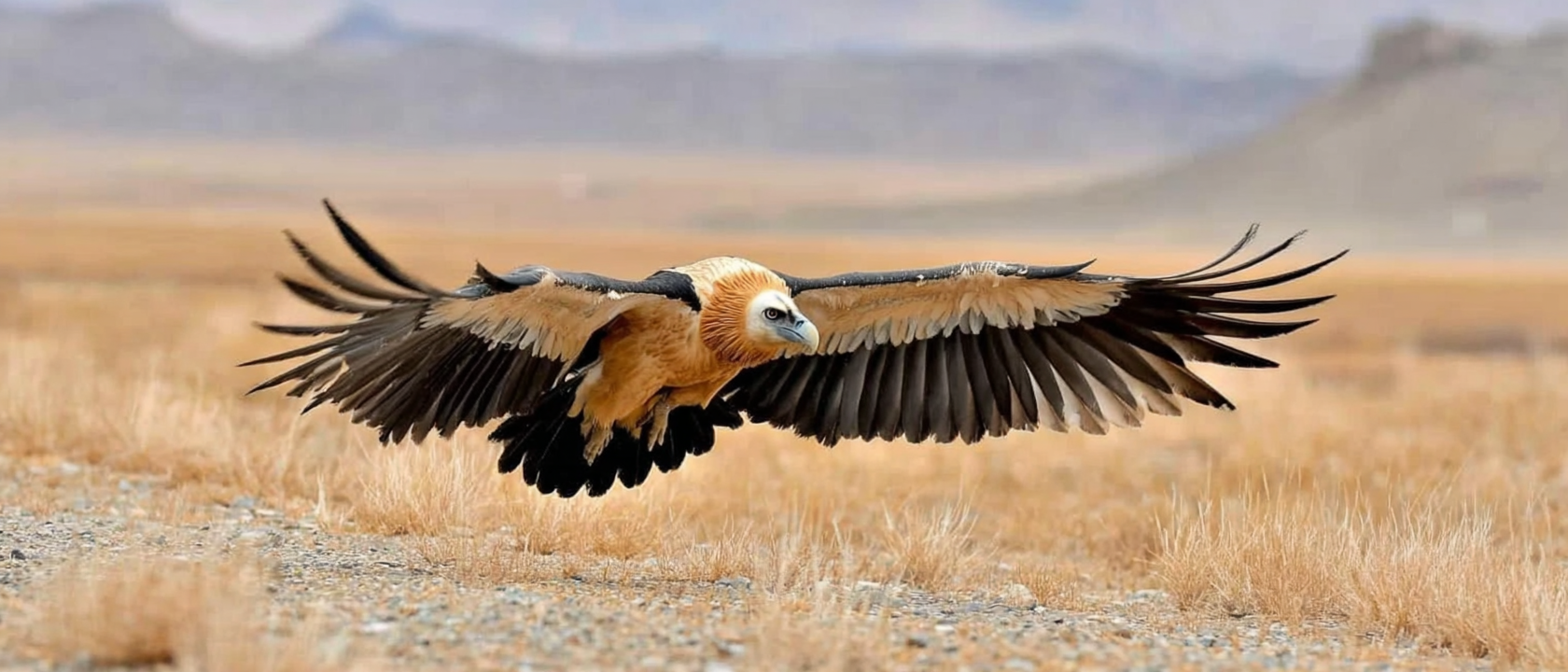
The bearded vulture, also known as the lammergeier, represents one of the most extraordinary bird species inhabiting the Gobi Desert of Mongolia. This magnificent raptor has adapted to survive in one of Earth’s harshest environments, making the bearded vulture Gobi population a subject of fascination for ornithologists and wildlife enthusiasts worldwide. The lammergeier’s presence in the Gobi Desert ecosystem demonstrates remarkable evolutionary adaptation to extreme conditions that would challenge most avian species.
What is a Bearded Vulture?
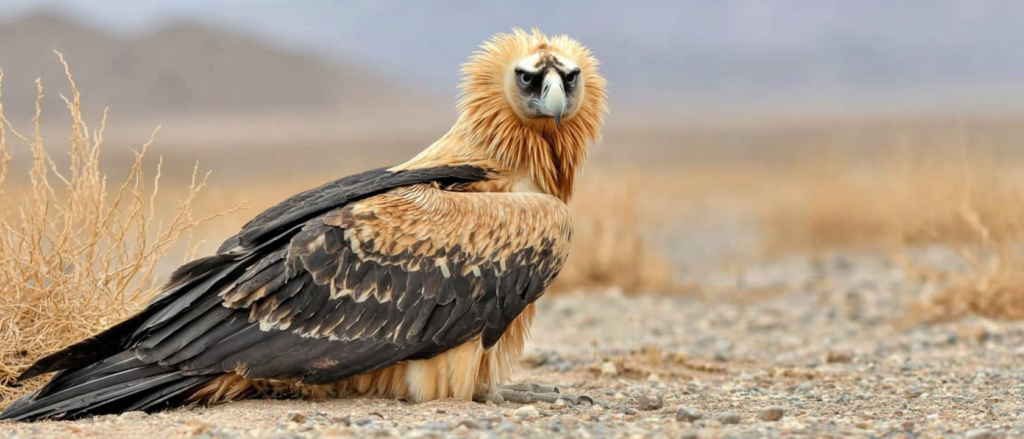
The bearded vulture (Gypaetus barbatus) stands apart from other vulture species through its unique appearance and feeding habits. Unlike typical vultures, the bearded vulture exhibits striking plumage that ranges from golden-orange to rust-red on its body, contrasted by dark wings and a distinctive black facial mask. The bird derives its common name from the conspicuous black feathers forming a beard-like tuft beneath its beak, giving the lammergeier an almost mythical appearance as it soars through Gobi Desert skies.
Adult bearded vultures measure between 94 and 125 centimeters in length, with an impressive wingspan reaching up to 2.8 meters. This substantial size makes the bearded vulture one of the largest birds of prey in the Gobi Desert region. The lammergeier’s wedge-shaped tail distinguishes it from other large raptors, serving as a crucial identification feature when observing bearded vultures in their natural Gobi habitat. Their flight pattern is graceful and deliberate, with the bearded vulture spending hours soaring on thermal currents while surveying vast stretches of Gobi terrain below.
The orange-red coloration seen in adult bearded vultures actually results from the birds deliberately bathing in iron oxide-rich soil and water. Young lammergeiers display much darker, almost black plumage before gradually transitioning to the characteristic coloration that makes adult bearded vultures so visually striking against the Gobi Desert landscape.
Bearded Vulture Habitat in the Gobi Desert
The Gobi Desert provides essential habitat for bearded vulture populations across Mongolia and northern China. These remarkable birds prefer mountainous terrain within the Gobi, particularly areas featuring steep cliffs and rocky gorges. The bearded vulture nests on inaccessible cliff ledges, where pairs establish territories spanning hundreds of square kilometers. The rugged topography of the Gobi creates ideal conditions for lammergeier populations to thrive, with countless nesting sites protected by sheer rock faces.
The Gobi Gurvan Saikhan National Park serves as a critical stronghold for bearded vulture conservation in Mongolia. Within this protected area, the famous Yolyn Am valley, also called the Valley of the Eagles, provides optimal bearded vulture habitat. The deep, narrow gorge maintains ice formations well into summer, creating a microclimate that supports the ecosystem upon which bearded vultures depend. This unique environment attracts wildlife photographers and birders from around the world, all hoping to glimpse the magnificent bearded vulture in its natural Gobi setting.
Bearded vultures in the Gobi have adapted to extreme temperature variations, from scorching summer heat exceeding 40°C to harsh winters plunging below -40°C. The Gobi’s sparse vegetation and rugged landscape suit the bearded vulture’s soaring lifestyle, as thermal updrafts along mountain ridges enable these birds to cover vast distances while searching for food. A single bearded vulture may patrol an area exceeding 300 square kilometers daily, demonstrating the extensive habitat requirements of Gobi lammergeier populations.
The elevation preferences of bearded vultures in the Gobi typically range from 1,000 to 3,000 meters above sea level, where rocky outcrops and cliff formations provide suitable nesting sites. During winter months, some Gobi bearded vultures may descend to lower elevations where food availability increases, though most resident pairs remain within their established territories year-round.
The Bone-Breaking Behavior of Bearded Vultures
What truly distinguishes the bearded vulture from other scavengers is its remarkable bone-breaking feeding strategy. The lammergeier specializes in consuming bone marrow, deriving approximately 90% of its diet from skeletal remains that other scavengers leave behind. This unique niche allows bearded vultures to thrive in the Gobi Desert, where competition for carrion can be intense. While other vultures fight over soft tissues, the bearded vulture patiently waits to claim the bones that remain.
Bearded vultures employ a dramatic hunting technique called ossifragy, carrying bones high into the air before dropping them onto rocky surfaces below. The impact shatters larger bones, exposing the nutritious marrow within. A single bearded vulture may make multiple flights to break particularly large bones, demonstrating remarkable persistence and problem-solving abilities. Observers in the Gobi have documented lammergeiers carrying bones weighing up to four kilograms to heights exceeding 80 meters before releasing them.
The bone-breaking behavior of bearded vultures requires considerable skill and experience. Young lammergeiers initially struggle with accuracy, often missing their target zones or selecting inappropriate dropping sites. Through trial and error over several years, Gobi bearded vultures learn to identify the most effective rocky platforms and develop the precision necessary to shatter bones efficiently. Some individual bearded vultures in the Gobi establish preferred dropping sites, returning repeatedly to the same locations where accumulated bone fragments testify to years of use.
The digestive system of the bearded vulture has evolved specifically for processing bone material. Their powerful stomach acids can dissolve bone fragments completely, extracting essential calcium and other minerals. Young bearded vultures learn the bone-breaking technique through observation, refining their accuracy over several years before mastering this essential survival skill. The lammergeier’s specialized digestive enzymes allow these birds to process materials that would be indigestible to virtually any other vertebrate species.
Bearded Vulture Diet and Feeding Ecology
Beyond bones, the bearded vulture diet includes tortoise shells, horns, and occasionally small live prey such as hyraxes or marmots in other parts of their range. In the Gobi Desert ecosystem, bearded vultures primarily scavenge from the carcasses of ibex, argali sheep, and domestic livestock. The lammergeier’s role as a bone specialist complements other scavengers, ensuring complete nutrient recycling within the harsh Gobi environment. This ecological function makes bearded vultures essential to maintaining the health of Gobi Desert ecosystems.
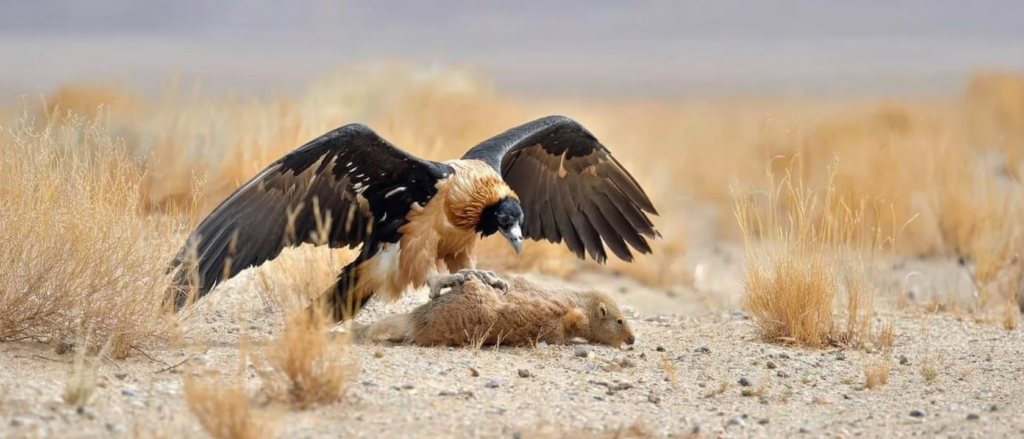
Bearded vultures require substantial daily food intake, consuming approximately 250-400 grams of bone material per day. Juvenile bearded vultures receive regurgitated bone fragments from their parents, with the bones becoming progressively larger as the young birds develop stronger digestive capabilities. This specialized feeding strategy means bearded vulture populations depend on healthy ungulate populations within their Gobi Desert territories.
The feeding ecology of Gobi bearded vultures also includes opportunistic predation on smaller animals when available. Though rare, lammergeiers have been observed capturing live tortoises, which they drop from height to break open the shells. During particularly harsh winters in the Gobi, bearded vultures may supplement their bone-based diet with frozen carrion and occasional small mammals, demonstrating dietary flexibility that aids survival in this unforgiving environment.
Bearded Vulture Breeding and Life Cycle
Bearded vultures form monogamous pairs that maintain lifelong bonds, defending their Gobi Desert territories year-round. The breeding season begins during the coldest months, with bearded vultures laying eggs between December and February. This timing ensures that chicks fledge during spring and early summer when food availability peaks across the Gobi. The counter-intuitive winter breeding strategy of bearded vultures reflects the extended developmental period required for young lammergeiers to reach independence.
Female bearded vultures typically lay one to two eggs in massive nests constructed from sticks, bones, and lined with wool and animal hair. The nest sites on Gobi cliff faces offer protection from ground predators and harsh weather. Both parents share incubation duties over approximately 55 days, rarely leaving the eggs exposed to the extreme Gobi climate. Some bearded vulture nests in the Gobi Desert have been used continuously for decades, with pairs adding new material each breeding season until the structures reach impressive dimensions exceeding two meters in diameter.
Young bearded vultures remain dependent on their parents for four to five months after fledging. Juvenile lammergeiers display darker plumage than adults, gradually acquiring the characteristic golden-orange coloration over seven to eight years. This extended maturation period means bearded vulture populations grow slowly, making conservation efforts particularly critical for Gobi populations. Bearded vultures don’t reach breeding maturity until approximately seven years of age, further limiting population growth rates even under ideal conditions.
The parental investment required by bearded vultures ranks among the highest of any bird species. Gobi bearded vulture pairs typically raise only one chick every two years successfully, with the older, stronger chick often outcompeting its sibling in two-egg clutches. This reproductive strategy, while limiting population expansion, ensures that successfully fledged young bearded vultures receive maximum parental attention and have the best possible chance of survival.
Conservation Status of Gobi Bearded Vultures
The bearded vulture faces conservation challenges throughout its range, including populations in the Gobi Desert. International conservation organizations classify the lammergeier as Near Threatened globally, though specific Gobi populations face varying degrees of risk. Habitat loss, poisoning, and declining prey populations threaten bearded vulture numbers across Mongolia. The Gobi bearded vulture population represents one of the healthier populations globally, yet even these birds face mounting pressures from human activities.
Mongolian conservation programs focus on protecting bearded vulture breeding sites within national parks and nature reserves. Research initiatives track Gobi bearded vulture populations through systematic surveys and satellite telemetry studies. These efforts provide crucial data on movement patterns, territory sizes, and survival rates for bearded vultures inhabiting the Gobi Desert ecosystem. Collaborative projects between Mongolian scientists and international researchers have revealed that Gobi bearded vulture territories average approximately 30-40 square kilometers, with some pairs requiring even larger ranges.
Poisoning represents a severe threat to bearded vultures, particularly from pesticides and poisons intended for wolves but consumed by scavenging birds. Educational campaigns in Mongolia aim to reduce poison use near bearded vulture habitats. Additionally, declining populations of wild ungulates in parts of the Gobi reduce available food resources for lammergeiers and other scavengers. Climate change effects on Gobi ecosystems may further impact bearded vulture prey availability, creating cascading effects throughout the food web.
Community-based conservation initiatives engage local herders in protecting bearded vulture nesting sites. Some programs provide incentives for communities that maintain healthy lammergeier populations within their traditional grazing areas. These grassroots efforts complement government protection measures, creating comprehensive conservation strategies for Gobi bearded vultures.
Observing Bearded Vultures in the Gobi Desert
Wildlife enthusiasts seeking to observe bearded vultures should visit the Gobi Desert between April and October when weather conditions allow comfortable travel. Yolyn Am in Gobi Gurvan Saikhan National Park offers the best opportunities for bearded vulture sightings, with resident pairs frequently soaring along the gorge walls. The dramatic landscape of Yolyn Am provides not only excellent bearded vulture habitat but also stunning photographic opportunities for visitors documenting these magnificent birds.
Early morning hours provide optimal bearded vulture viewing opportunities when these magnificent birds become active, riding thermal currents while searching for food. Patient observers scanning the sky above rocky outcrops and cliffs often spot the distinctive silhouette of bearded vultures, recognizing them by their diamond-shaped tail and contrasting plumage patterns. Binoculars or spotting scopes significantly enhance bearded vulture viewing experiences, allowing observers to appreciate the intricate plumage details and observe bone-dropping behavior from respectful distances.
Tips for spotting bearded vultures in the Gobi:
- Visit during early morning or late afternoon when lammergeiers are most active
- Focus observations on cliff faces and rocky gorges where bearded vultures nest
- Look for characteristic soaring patterns with minimal wing flapping
- Listen for the distinctive whistling calls that bearded vultures occasionally produce
Local guides familiar with bearded vulture territories significantly improve sighting chances throughout the Gobi region. These experts understand seasonal movement patterns and can identify favored roosting sites where lammergeiers rest during midday heat. Respectful observation from appropriate distances ensures minimal disturbance to these sensitive raptors. Photography enthusiasts should use telephoto lenses to capture bearded vulture images without approaching nesting areas or causing disturbance.
Several tour operators in Mongolia specialize in wildlife-focused expeditions to Gobi Desert bearded vulture habitat. These organized trips combine comfortable accommodations with expert guidance, maximizing opportunities to observe lammergeiers while supporting local conservation efforts through tourism revenue.
Cultural Significance of Bearded Vultures
In Mongolian culture, the bearded vulture holds special significance as a symbol of the untamed Gobi wilderness. Traditional Mongolian names for the lammergeier reflect respect for this powerful bird and recognition of its unique ecological role. Nomadic herders sharing the Gobi landscape with bearded vultures have coexisted with these birds for centuries, developing deep knowledge of lammergeier behavior and ecology.
Folklore throughout the Gobi region includes stories featuring bearded vultures, often portraying the lammergeier as a wise and powerful spirit of the mountains. This cultural reverence contributes to local tolerance of bearded vultures, even when occasional conflicts arise over livestock carcasses. The distinctive appearance and dramatic bone-dropping behavior of lammergeiers have captured human imagination across generations of Gobi Desert inhabitants.
The Future of Bearded Vultures in the Gobi
Protecting bearded vulture populations in the Gobi Desert requires continued conservation commitment from Mongolia and international partners. Expanding protected areas, reducing human-wildlife conflict, and maintaining healthy prey populations will determine whether future generations can witness these extraordinary bone-breaking raptors soaring above the Gobi’s dramatic landscapes. The Gobi Desert represents a global stronghold for bearded vultures, making Mongolian conservation efforts critically important for the species’ overall survival.
Climate change poses additional challenges for Gobi bearded vultures as shifting weather patterns affect prey availability and breeding success. Long-term monitoring programs tracking bearded vulture populations provide early warning of population declines, enabling rapid conservation responses. Researchers predict that successful bearded vulture conservation in the Gobi will require adaptive management strategies that account for changing environmental conditions.
The bearded vulture of the Gobi Desert represents a remarkable example of evolutionary adaptation to extreme environments. As apex scavengers specializing in the most challenging food sources, lammergeiers demonstrate nature’s ingenuity in exploiting every available niche. Ensuring the survival of Gobi bearded vulture populations preserves not only a magnificent species but also the ecological integrity of one of Asia’s most iconic wilderness areas. Every bearded vulture soaring above the Gobi‘s ancient mountains serves as a testament to the resilience of life in Earth’s harshest landscapes and a reminder of our responsibility to protect these irreplaceable natural treasures.
Leave a Reply