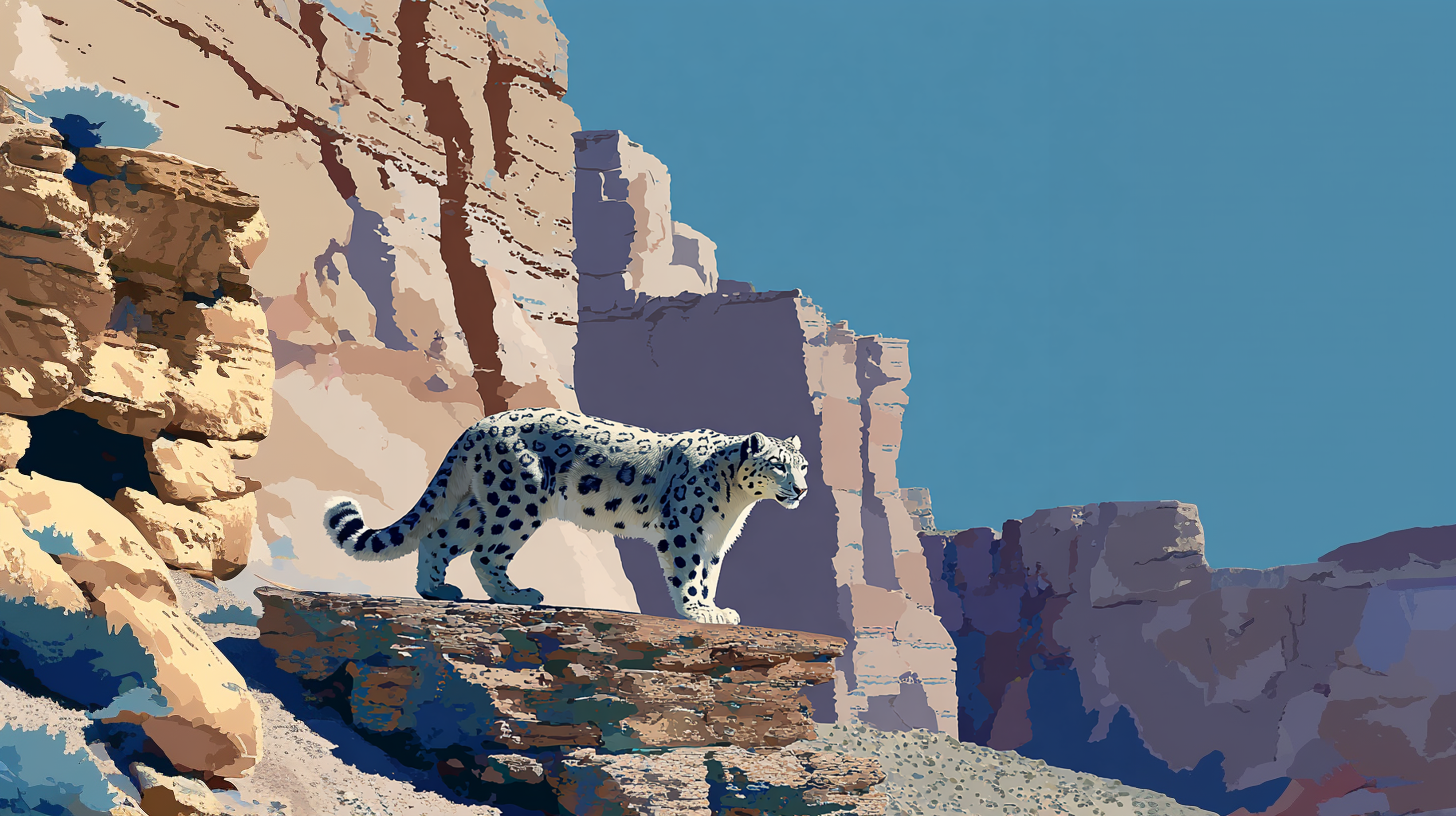
The snow leopard in the Gobi Desert is one of the most mysterious and least understood big cats on Earth. Known as the “ghost of the mountains,” the snow leopard (Panthera uncia) is famous for its ability to disappear into rocky landscapes, leaving behind little more than tracks and fleeting camera-trap images. While most people associate snow leopards with the towering peaks of the Himalayas, one of their most extraordinary populations lives in the Gobi Desert of southern Mongolia.
The presence of the Snow Leopard Gobi population challenges common assumptions about deserts, predators, and survival. The Gobi is not a hot sand desert but a vast cold desert, dominated by rocky mountains, gravel plains, and extreme temperature swings. In this harsh environment, the snow leopard has become one of the most remarkable Gobi Desert animals, perfectly adapted to life at the edge of survival.
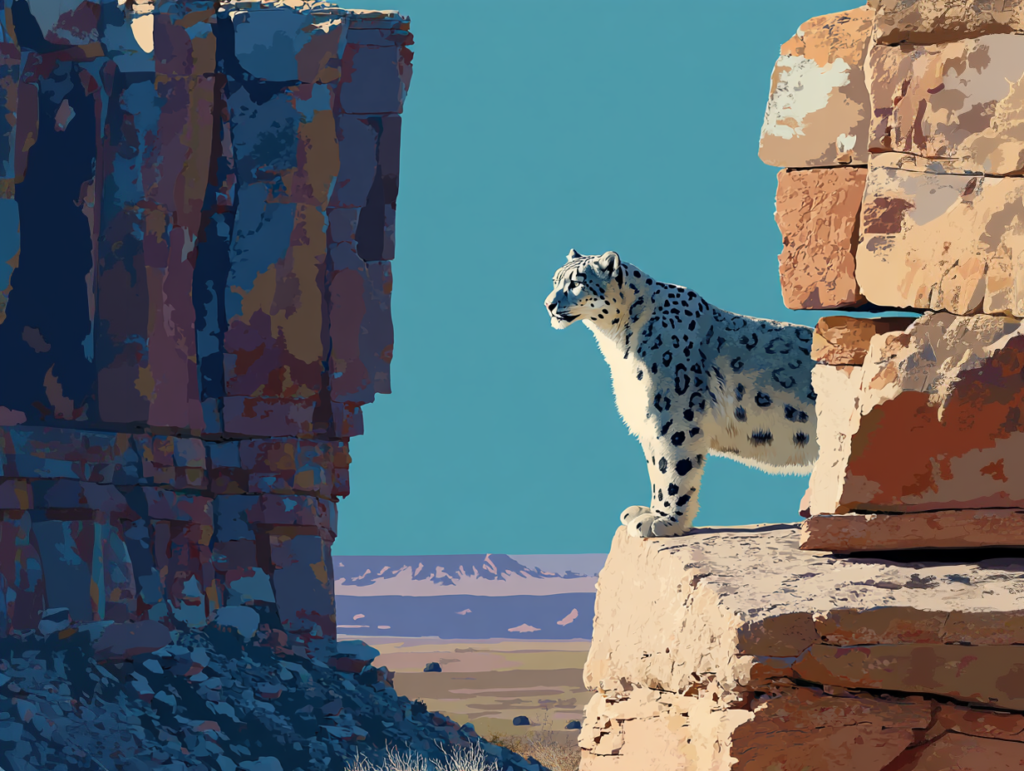
The Snow Leopard (Panthera uncia): An Overview
The snow leopard is a medium-sized big cat native to Central and South Asia. It is uniquely adapted to high-altitude and cold environments, with a range that stretches across 12 countries, including Mongolia, China, India, Nepal, Pakistan, Kyrgyzstan, and Tajikistan.
Key characteristics of the snow leopard:
- Thick, pale gray fur with dark rosettes
- Long, powerful tail used for balance and warmth
- Broad, fur-covered paws that act like snowshoes
- Short muzzle and enlarged nasal cavities for cold air
- Exceptional strength and agility
Unlike other big cats, snow leopards cannot roar, but they communicate through vocalizations such as yowls, growls, and chuffing sounds.
Snow Leopard Gobi: A Unique Desert Population
Why the Gobi Snow Leopard Is Special
The Snow Leopard Gobi population is one of the most unique in the species’ entire range. Unlike snow leopards living in heavily glaciated mountain systems, Gobi snow leopards inhabit arid, rocky desert mountains with very limited water and prey availability.
This makes them:
- More wide-ranging than mountain snow leopards
- Highly adapted to prey scarcity
- Dependent on fragile desert ecosystems
- Extremely vulnerable to environmental change
The Gobi snow leopard represents the southernmost desert-adapted edge of snow leopard ecology.
Snow Leopard Habitat in the Gobi Desert
The Cold Desert Environment
The Gobi Desert is one of the largest deserts in Asia, spanning southern Mongolia and northern China. Unlike sandy deserts, the Gobi is dominated by:
- Rocky plateaus
- Gravel plains
- Dry riverbeds
- Rugged mountain ranges
Snow leopards in the Gobi primarily inhabit mountainous regions, where prey species are most abundant and human disturbance is minimal.
Key Snow Leopard Habitats in the Gobi
In Mongolia, snow leopards are most commonly found in:
- The Gobi Altai Mountains
- Rocky desert ridges
- Steep cliffs and narrow ravines
- High-elevation outcrops surrounded by arid plains
These habitats provide:
- Natural camouflage
- Elevated vantage points for hunting
- Protection from human activity
- Seasonal access to prey migrations
Despite the desert setting, winter temperatures in these regions often fall below –30°C, reinforcing the snow leopard’s status as a cold-adapted predator.
Adaptations of the Snow Leopard to the Gobi Desert
The Snow Leopard Gobi population displays extraordinary adaptations that allow survival in a cold, dry, and food-limited environment.
Physical Adaptations
- Dense fur insulates against extreme cold
- Large paws distribute weight on snow and rock
- Long tail aids balance on cliffs and acts as a blanket
- Powerful hind legs allow leaps up to 15 meters
- Camouflage coat blends perfectly with rock and snow
These features make the snow leopard nearly invisible in its environment.
Behavioral Adaptations
Snow leopards in the Gobi:
- Travel long distances between prey encounters
- Use cliff systems and ridgelines to conserve energy
- Are primarily crepuscular and nocturnal
- Avoid direct contact with humans at all costs
This combination of physical and behavioral adaptations makes them one of the most efficient predators among Gobi Desert animals.
Hunting Behavior and Diet of the Gobi Snow Leopard
Solitary and Strategic Hunters
Snow leopards are solitary hunters, relying on stealth, patience, and terrain rather than speed. In the Gobi Desert, hunting opportunities are scarce, so each kill is critical for survival.
They use:
- Ambush tactics from above
- Narrow mountain passes
- Surprise attacks from cliffs or boulders
A single successful hunt can sustain a snow leopard for several days.
Primary Prey Species in the Gobi
The diet of the Snow Leopard Gobi population includes:
- Siberian ibex
- Argali sheep
- Marmots
- Hares and pikas
- Small rodents and birds
In rare cases, snow leopards may prey on livestock, which can lead to conflict with herders.
Why Snow Leopards Are Rarely Seen in the Gobi
Seeing a snow leopard in the Gobi Desert is extraordinarily rare — even for scientists.
Reasons for Their Elusiveness
- Exceptional camouflage against rock and snow
- Nocturnal and crepuscular activity
- Vast territories, often hundreds of square kilometers
- Low population density
- Natural avoidance of humans
Most confirmed evidence of snow leopards in the Gobi comes from camera traps, GPS collars, and tracks rather than direct sightings.
Territory and Home Range
Snow leopards in the Gobi have some of the largest home ranges recorded for the species.
- Males may roam over 500–1,000 km²
- Females occupy slightly smaller territories
- Ranges often overlap with other snow leopards
- Movement patterns follow prey availability and seasons
These massive territories reflect the low productivity of desert ecosystems.
Reproduction and Life Cycle
Snow leopards reproduce slowly, which contributes to their vulnerability.
Key Reproductive Facts
- Mating season: January to March
- Gestation period: ~90–100 days
- Litter size: 1–3 cubs
- Cubs remain with mother for up to 18–22 months
High cub mortality and long intervals between litters make population recovery slow.
Conservation Status of the Snow Leopard Gobi Population
The snow leopard is listed as Vulnerable globally, but many regional populations, including the Gobi snow leopard, face severe pressure.
Threats in the Gobi Desert
- Habitat fragmentation
- Decline of prey species
- Retaliatory killing due to livestock predation
- Illegal hunting and trade
- Climate change altering mountain ecosystems
- Mining and infrastructure development
Because Gobi snow leopards rely on fragile desert mountain systems, even small disruptions can have major impacts.
Why Mongolia Is Critical for Snow Leopard Conservation
Mongolia is home to one of the world’s largest remaining snow leopard populations, making it a cornerstone of global conservation efforts.
Protecting snow leopards in the Gobi helps preserve:
- Entire mountain ecosystems
- Healthy populations of ibex and argali
- Traditional nomadic pastoralism
- Biodiversity of the cold desert
Snow leopards act as an umbrella species — protecting them protects everything beneath them.
Conservation Efforts in the Gobi Desert
Key conservation initiatives include:
- Long-term camera-trap monitoring
- GPS collaring and movement studies
- Community-based conservation with herders
- Livestock insurance programs
- Anti-poaching patrols
- Protected areas in the Gobi Altai
International cooperation plays a crucial role in safeguarding the Snow Leopard Gobi population.
Snow Leopards and Nomadic Life
For centuries, snow leopards have coexisted with nomadic herders in Mongolia.
Traditional beliefs often:
- Respect snow leopards as mountain spirits
- Discourage unnecessary killing
- Emphasize balance with nature
Modern conservation increasingly works with herders to reduce conflict while protecting livelihoods.
Can You See a Snow Leopard in the Gobi Desert?
Realistic Expectations
Seeing a snow leopard in the wild is extremely unlikely for travelers. Even experienced researchers may go years without a direct sighting.
Most encounters are limited to:
- Camera-trap images
- Tracks in snow
- Reports from herders
Responsible wildlife tourism focuses on habitat appreciation, not guaranteed sightings.
Climate Change and the Future of the Gobi Snow Leopard
Climate change poses a growing threat to snow leopards worldwide.
In the Gobi Desert, climate impacts include:
- Reduced snowpack
- Changing prey distribution
- Increased drought frequency
- Expansion of human activity into higher elevations
These changes may force snow leopards into even more marginal habitats.
Why the Snow Leopard Matters to the Gobi Desert
The Snow Leopard Gobi population is a symbol of wilderness, resilience, and ecological balance.
As a top predator, the snow leopard:
- Regulates prey populations
- Maintains healthy mountain ecosystems
- Indicates environmental health
- Represents the wild heart of the Gobi Desert
Losing the snow leopard would mean losing the ecological integrity of the Gobi’s mountain systems.
Conclusion: The Phantom Guardian of the Gobi
The snow leopard in the Gobi Desert is one of the planet’s most extraordinary predators. Thriving in a cold desert where life clings to survival, it embodies adaptation, stealth, and endurance.
Protecting the Snow Leopard Gobi population is not just about saving a single species — it is about preserving an entire ecosystem shaped by extremes. As long as snow leopards roam the rocky mountains of the Gobi, the desert remains truly wild.
Leave a Reply