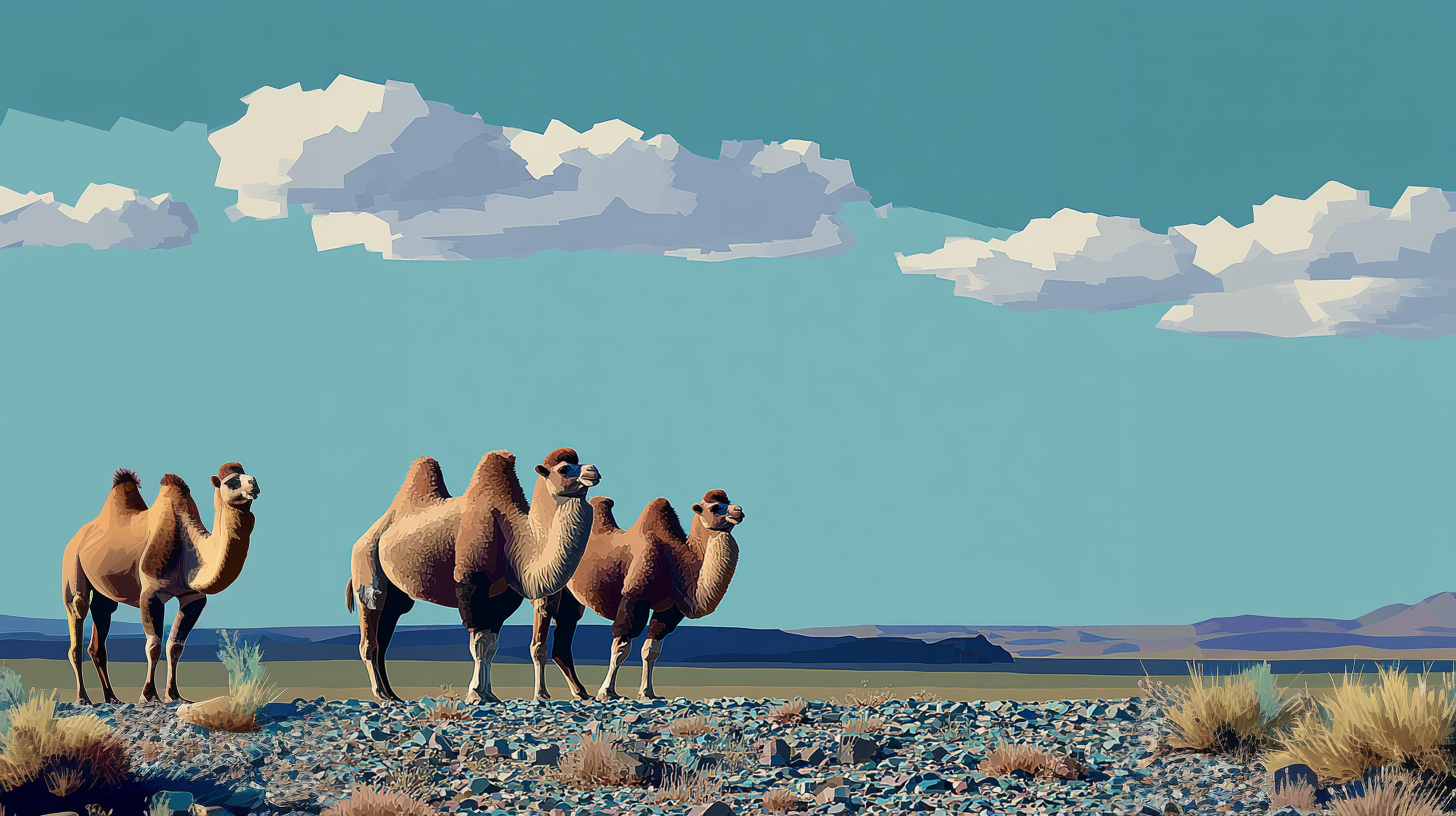
The Bactrian camel is the most iconic and instantly recognizable animal of the Gobi Desert. Distinguished by its two massive humps, thick fur, and calm endurance, this remarkable mammal is perfectly adapted to survive in one of the most extreme climates on Earth. From freezing winters to scorching summers, from saltwater springs to barren plains, the Bactrian camel has mastered survival where few large animals can.
For thousands of years, the Bactrian camel has been essential to human survival, trade, and travel across Central Asia. It carried merchants along the Silk Road, sustained nomadic families, and enabled life in some of the most remote desert regions on the planet. Today, it remains one of the most important Gobi Desert animals, both culturally and ecologically.
What Is a Bactrian Camel?
The Bactrian camel (Camelus bactrianus) is a large camel species native to Central Asia and best known for its two humps, which distinguish it from the one-humped dromedary camel of the Middle East and North Africa.
The Bactrian camel evolved specifically for cold desert environments, making it uniquely suited to the Gobi Desert, where temperatures can plunge below –40°C in winter and rise above +40°C in summer.
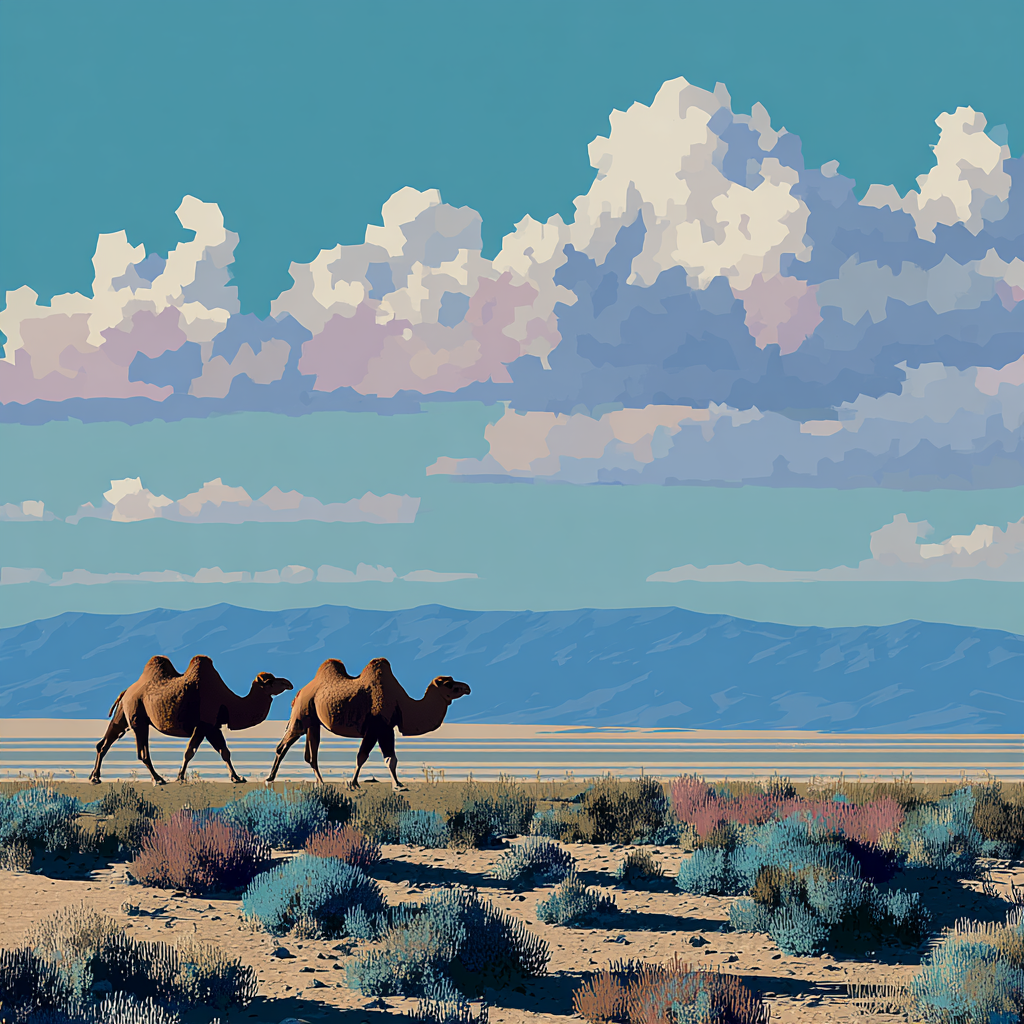
Key identifying features of the Bactrian camel include:
- Two large humps
- Thick, shaggy fur in winter
- Broad, padded feet
- Long eyelashes and closable nostrils
- Exceptional tolerance for dehydration and salinity
Wild and Domestic Bactrian Camels
There are two distinct types of Bactrian camel, and understanding the difference between them is critical for conservation.
Domestic Bactrian Camel
The domestic Bactrian camel has been used by humans for at least 4,000 years and remains central to life in Mongolia and Central Asia.
Characteristics of domestic Bactrian camels:
- Raised by nomadic herders
- Used for transport across deserts and steppes
- Provide milk, wool, meat, and hides
- Highly adapted to human-managed landscapes
- Found throughout Mongolia, Kazakhstan, western China, and parts of Central Asia
Domestic Bactrian camels are still an essential part of nomadic culture in the Mongolian Gobi, where they serve as pack animals and a reliable source of food and clothing.
Wild Bactrian Camel (Camelus ferus)
The wild Bactrian camel (Camelus ferus) is one of the rarest large mammals on Earth and is completely different from its domestic counterpart.
Key facts about the wild Bactrian camel:
- Classified as Critically Endangered
- Fewer than 1,000 individuals remain worldwide
- Found only in remote regions of the Gobi Desert and northwest China
- Genetically distinct from domestic Bactrian camels
- Adapted to extreme isolation and scarcity
Importantly, the wild Bactrian camel is not the ancestor of the domestic camel. Genetic research has shown that it is a separate evolutionary lineage, making its conservation even more urgent.
Adaptations of the Bactrian Camel
The Bactrian camel’s adaptations are among the most impressive in the animal kingdom. These adaptations allow it to survive in conditions that would kill most mammals.
Extreme Temperature Tolerance
The Bactrian camel can endure:
- –40°C winters with icy winds and snow
- +40°C summers with intense solar radiation
Its thick winter coat provides insulation against extreme cold and is shed in large clumps during summer to prevent overheating.
Water Conservation and Dehydration Resistance
The Bactrian camel is famous for its ability to survive weeks without drinking water.
Key water-related adaptations include:
- Ability to lose up to 30% of body weight through dehydration
- Rapid rehydration when water becomes available
- Ability to drink salty or brackish water that would kill most animals
Contrary to popular belief, camel humps do not store water — they store fat, which can be metabolized for energy and moisture.
Specialized Anatomy for Desert Life
Other crucial adaptations of the Bactrian camel include:
- Long eyelashes to protect eyes from sandstorms
- Closable nostrils to block dust and sand
- Thick lips that allow it to eat thorny desert plants
- Wide, padded feet that prevent sinking into sand and provide traction on rocks
These features make the Bactrian camel one of the most successful and resilient Gobi Desert animals.
Diet of the Bactrian Camel
The Bactrian camel is a highly adaptable herbivore capable of eating vegetation that other animals cannot digest.
Typical Diet Includes:
- Dry desert grasses
- Thorny shrubs
- Salt-tolerant plants
- Saxaul and other woody desert vegetation
- Low-nutrient plants avoided by livestock
This flexible diet allows the Bactrian camel to survive in overgrazed or nutrient-poor environments, reducing direct competition with other herbivores.
Role of the Bactrian Camel in Gobi Culture
The Bactrian camel has shaped human history in the Gobi Desert more than almost any other animal.
Silk Road and Trade
For centuries, Bactrian camels were the backbone of:
- Silk Road trade caravans
- Transport of silk, spices, salt, and precious metals
- Long-distance commerce between East Asia, the Middle East, and Europe
Their ability to carry heavy loads over long distances without water made them indispensable.
Nomadic Life in the Gobi Desert
In Mongolia, camels remain central to nomadic culture:
- Used for seasonal migration
- Provide milk for traditional dairy products
- Produce wool used for clothing and blankets
- Symbolize wealth and resilience
Camels also play a role in Mongolian folklore, music, and festivals, reflecting their deep cultural importance.
Behavior and Social Structure
Bactrian camels are generally:
- Calm and deliberate in movement
- Social animals, often forming small groups
- Highly intelligent and capable of remembering routes and water sources
Wild Bactrian camels tend to be more solitary and wary, avoiding humans and inhabiting extremely remote terrain.
Conservation Status of the Wild Bactrian Camel
The wild Bactrian camel is listed as Critically Endangered by conservation authorities.
Major Threats Include:
- Habitat loss due to mining and infrastructure development
- Competition with livestock for limited vegetation
- Illegal hunting and disturbance
- Hybridization with domestic camels
- Climate change and increasing desertification
Because the population is so small, even minor disturbances can have disproportionate impacts.
Conservation Efforts in the Gobi Desert
Protected areas in the Gobi play a vital role in preserving wild Bactrian camels.
Key conservation actions include:
- Establishment of strict nature reserves
- Monitoring populations with GPS and camera traps
- Preventing contact with domestic camels
- Anti-poaching patrols
- International conservation cooperation
Saving the wild Bactrian camel also protects entire desert ecosystems, benefiting many other endangered species.
Ecological Importance of the Bactrian Camel
The Bactrian camel is a keystone species in the Gobi Desert.
Ecological roles include:
- Seed dispersal through dung
- Maintaining open desert vegetation
- Supporting predator and scavenger food chains
- Indicating ecosystem health
The loss of the wild Bactrian camel would signal serious degradation of the Gobi Desert ecosystem.
Can You See Bactrian Camels in the Gobi Desert?
Domestic Bactrian Camels
Yes — domestic Bactrian camels are commonly seen in the Mongolian Gobi, especially near nomadic settlements.
Wild Bactrian Camels
Seeing a wild Bactrian camel is extremely rare. They inhabit remote protected areas and actively avoid human contact. Most confirmed sightings come from camera traps rather than travelers.
The Future of the Bactrian Camel
The future of the domestic Bactrian camel remains relatively stable due to its continued role in nomadic life.
The future of the wild Bactrian camel, however, is uncertain.
Long-term survival depends on:
- Strong protection of habitat
- Preventing hybridization
- Reducing human disturbance
- Continued international conservation funding
Protecting the wild Bactrian camel is essential not only for biodiversity, but for preserving one of the last intact cold desert ecosystems on Earth.
Conclusion: A True Icon of the Gobi Desert
The Bactrian camel is more than just a desert animal — it is a symbol of endurance, adaptation, and human-animal coexistence. From ancient trade routes to modern conservation challenges, this two-humped survivor continues to define life in the Gobi Desert.
Whether as a companion to nomads or as one of the rarest wild mammals on Earth, the Bactrian camel remains one of the most remarkable examples of survival in extreme environments. Protecting it means protecting the heart of the Gobi Desert itself.
Leave a Reply