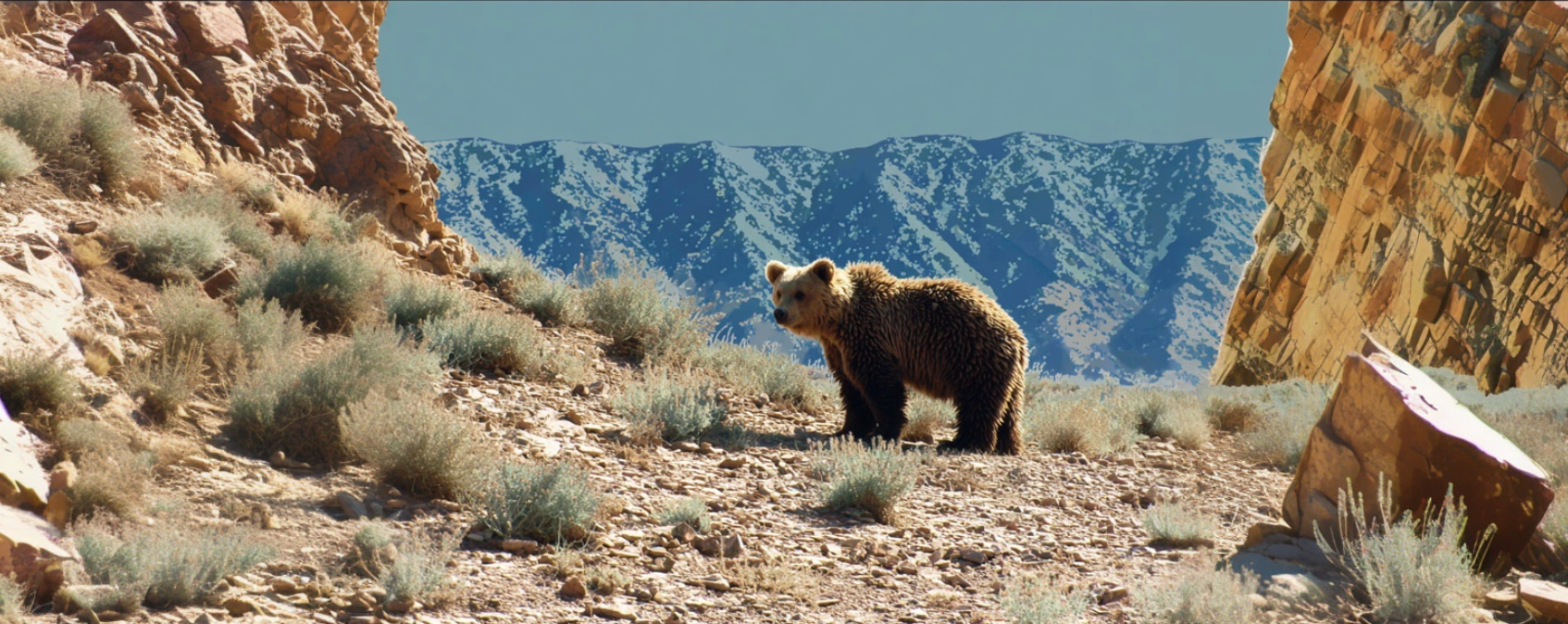
The Gobi bear (Ursus arctos gobiensis), known locally in Mongolia as the Mazaalai, is widely recognized as the rarest bear on Earth. Found exclusively in the remote regions of the Gobi Desert, this extraordinary subspecies represents one of the most extreme examples of wildlife adaptation to harsh desert environments. Unlike any other brown bear, the Gobi bear has evolved to survive in one of the harshest climates on the planet, where temperatures can swing from –30°C in winter to +40°C in summer, food is scarce, and water is limited.
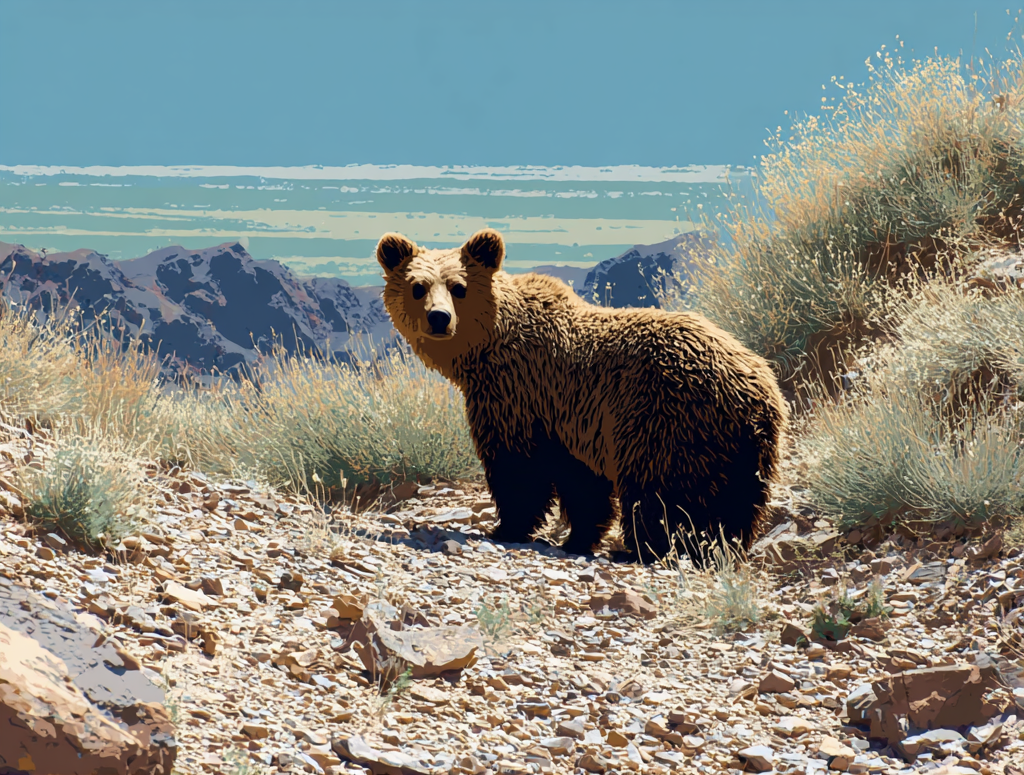
With a population estimated at fewer than 40 individuals, the Gobi bear is not only the rarest bear subspecies but also one of the most endangered large mammals on Earth. The survival of this elusive species depends entirely on the fragile balance of the Gobi Desert ecosystem, making it a critical focus of conservation in Mongolia and a symbol of the desert’s unique biodiversity.
What Makes the Gobi Bear Unique?
The Gobi bear is a subspecies of the brown bear, but it differs dramatically from forest and mountain brown bears found elsewhere in Eurasia and North America. While most brown bears rely on forests, rivers, and abundant vegetation or prey, the Gobi bear survives in a sparsely vegetated desert, requiring specialized adaptations that are rarely seen in other bears.
Unique Characteristics of the Gobi Bear
- Smaller body size: Gobi bears are generally smaller than most other brown bear subspecies, reflecting the limited availability of food in the desert.
- Leaner build: Unlike their forest-dwelling cousins, Gobi bears have a slender body, which is an adaptation to conserve energy.
- Exceptional endurance: They can travel long distances across barren landscapes in search of water and food.
- Ability to survive without water: Unlike most bears, Gobi bears can endure weeks with minimal water, obtaining moisture from plants and snow.
These adaptations allow the Gobi bear to withstand extreme temperature variations, from freezing winter nights to scorching summer days, while still surviving in one of the harshest environments on Earth.
Where Do Gobi Bears Live in the Gobi Desert?
The Gobi bear is found exclusively in southwestern Mongolia, inside the Great Gobi Strictly Protected Area (GGSPA), one of the largest protected desert areas in Asia. This remote region is almost entirely devoid of human settlements, which allows these bears to survive in isolation.
Typical Gobi Bear Habitat
The Gobi bear prefers:
- Rocky desert mountains: Providing shelter from extreme weather and predators
- Dry valleys and wadis: Natural corridors for movement and foraging
- Sparse steppe vegetation: Includes grasses, herbs, and rhubarb
- Isolated desert oases: Critical sources of water during dry periods
Because food and water are extremely limited, each Gobi bear requires an enormous home range, sometimes covering hundreds of square kilometers. The scarcity of resources forces them to move constantly, creating one of the largest known territorial ranges among bear species.
Diet of the Gobi Bear: How Bears Survive in the Desert
The diet of the Gobi bear is strikingly different from that of other brown bears. While many bears are omnivorous, feeding heavily on fish, meat, or forest fruits, the Gobi bear is primarily herbivorous, relying mostly on plants adapted to arid conditions.
Primary Food Sources
- Wild rhubarb (Rheum nanum): The most important food source, rich in water content and nutrients.
- Desert grasses and herbs: Seasonal vegetation provides sustenance during short growing periods.
- Saxaul roots and shoots: A hardy desert shrub that is vital for survival.
- Insects and larvae: Occasionally eaten to supplement protein intake.
- Small rodents: Opportunistically consumed when available.
- Occasional carrion: Rarely, Gobi bears scavenge meat.
Because meat is rarely consumed, the Gobi bear is one of the most herbivorous bear subspecies in the world. Their diet is carefully timed with seasonal plant growth, which is extremely limited in the desert.
Water Scarcity and Survival Strategies
Water availability is the most critical limiting factor for Gobi bears. Unlike bears in forested regions, the Mazaalai cannot rely on rivers or lakes, which are almost non-existent in the Gobi Desert.
Sources of Water for the Gobi Bear
- Natural springs: Few and far between, these are vital for survival.
- Seasonal snowmelt: Snow provides moisture during winter and early spring.
- Artificial water points: Conservationists maintain water points to help sustain the population.
In extreme drought years, supplemental feeding and water provision can mean the difference between survival and extinction for this critically endangered species.
Hibernation Behavior of the Gobi Bear
Unlike most bear species that undergo long hibernation periods, Gobi bears have adapted their hibernation behavior to desert conditions.
- Shorter hibernation periods: Bears may hibernate only during the coldest months.
- Skipping hibernation: In mild winters, some bears remain active year-round.
- Semi-active in winter: Occasional movement in search of limited food and water.
This flexible hibernation strategy allows the Gobi bear to maximize survival in an unpredictable environment.
Why Is the Gobi Bear So Endangered?
Several factors have pushed the Gobi bear to the brink of extinction:
- Climate change: Increasing desertification and hotter summers reduce plant growth and water availability.
- Shrinking water sources: Springs and oases are under threat from climate variation.
- Genetic isolation: With a population of fewer than 40 individuals, inbreeding reduces genetic diversity.
- Historical hunting: Past hunting pressures further diminished the population.
Because the population is so small, even minor environmental changes can have catastrophic effects, making the Gobi bear one of the most vulnerable large mammals in the world.
Conservation Efforts to Save the Gobi Bear
The Gobi bear is fully protected under Mongolian law, and conservationists have implemented several key strategies to ensure its survival.
Current Conservation Actions
- GPS tracking and population monitoring: To study movement patterns and habitat use.
- Genetic research: To assess genetic diversity and identify risks of inbreeding.
- Protection of water sources: Maintaining and safeguarding natural springs.
- Supplemental feeding during droughts: Providing necessary food to prevent starvation.
- Strict anti-poaching enforcement: Ensuring the bears remain safe from human threats.
By protecting the Gobi bear, conservationists also safeguard the entire Gobi Desert food web, which includes other endangered species such as the snow leopard and the wild Bactrian camel.
The Importance of the Gobi Bear to the Ecosystem
The Gobi bear plays a crucial ecological role:
- Seed dispersal: By feeding on plants, bears help propagate vegetation across the desert.
- Indicator species: Their health reflects the overall condition of the desert ecosystem.
- Cultural significance: The Gobi bear is a symbol of Mongolia’s wild heritage and resilience.
Protecting the Gobi bear ensures the long-term survival of other species and the stability of the Gobi Desert ecosystem.
Can You See a Gobi Bear in the Wild?
Observing a Gobi bear in its natural habitat is extremely rare. Even experienced wildlife researchers may never directly encounter one, as these bears are incredibly elusive and well-camouflaged.
However, studying the Gobi bear through camera traps, tracking, and research contributes significantly to global awareness and conservation efforts. Every piece of information helps scientists and conservationists make decisions that can prevent extinction.
The Future of the Gobi Bear
The survival of the Gobi bear depends on continued protection, research, and global awareness. While the species remains critically endangered, ongoing conservation initiatives give hope.
Protecting the Gobi bear is not just about saving a single species — it is about preserving one of the last intact cold desert ecosystems on Earth, supporting biodiversity, and maintaining the cultural heritage of the Mongolian Gobi.
Conclusion
The Gobi bear, or Mazaalai, is one of the most extraordinary examples of wildlife adaptation in the world. Living in extreme desert conditions with scarce food and water, this rarest of bears demonstrates resilience and survival against incredible odds. While its numbers are critically low, ongoing conservation efforts, scientific research, and global awareness are giving the Gobi bear a fighting chance to survive.
For anyone interested in wildlife, conservation, or the unique ecosystems of Mongolia, the Gobi bear represents the ultimate symbol of endurance and ecological importance. Protecting this rare subspecies ensures that the Gobi Desert remains a sanctuary for one of the planet’s most remarkable mammals.
Leave a Reply